GoSpotCheck is built on structure.
Every visit follows a defined flow. Tasks are assigned in advance. Data is collected in a consistent way. For many merchandising teams, this brings order to what would otherwise be a scattered process.
But structure comes with a trade-off. The more predefined the workflow becomes, the harder it is to adapt in real time. And merchandising rarely happens exactly as planned.
Stores change. Displays shift. Competitors react. Reps often need to make decisions on the spot, not just follow instructions. That is where some teams begin to outgrow GoSpotCheck.
When Structure Starts to Slow Things Down
At first, structured workflows feel like control.
Every rep follows the same steps. Every visit produces comparable data. Reporting becomes easier.
Over time, another pattern appears. Reps spend more time completing tasks than responding to what they actually see. Adjustments require workarounds. Actions that fall outside predefined steps are handled later, outside the system.
The process remains organized, but it becomes less responsive. For SMB teams that operate in dynamic retail environments, this can become a limitation.
What Teams Start Looking For Instead
When teams move away from strict task-based systems, they are not looking for less structure. They are looking for adaptive workflows. That usually means three things.
The system should support planned tasks, but not restrict unplanned actions. The rep should be able to react to the store environment without switching tools. The outcome of a visit should not depend on what happens after the visit.
Different platforms approach this in different ways.
1. SimplyDepo
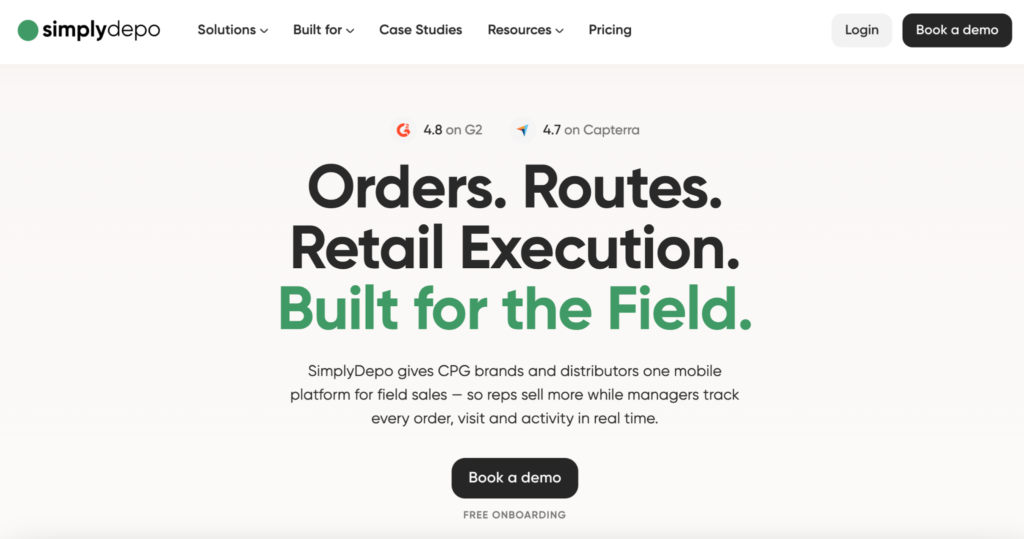
SimplyDepo is built around flexibility inside a structured process.
Instead of forcing every visit into a fixed sequence, it allows the workflow to expand based on what happens in the store. A rep can start with an audit, but does not have to stop there.
The platform includes:
- Shelf audits and planogram checks
- Photo reporting and visit tracking
- Order capture during store visits
- Route planning and delivery coordination
- Invoicing and QuickBooks sync
What makes this different is how these pieces connect. The rep is not limited to predefined tasks. If something needs to be done, it can be done immediately.
This makes the system more responsive in environments where conditions change quickly.
At the same time, it assumes that merchandising is connected to sales or distribution. Teams that only need structured audits may not need that level of flexibility.
2. Repsly
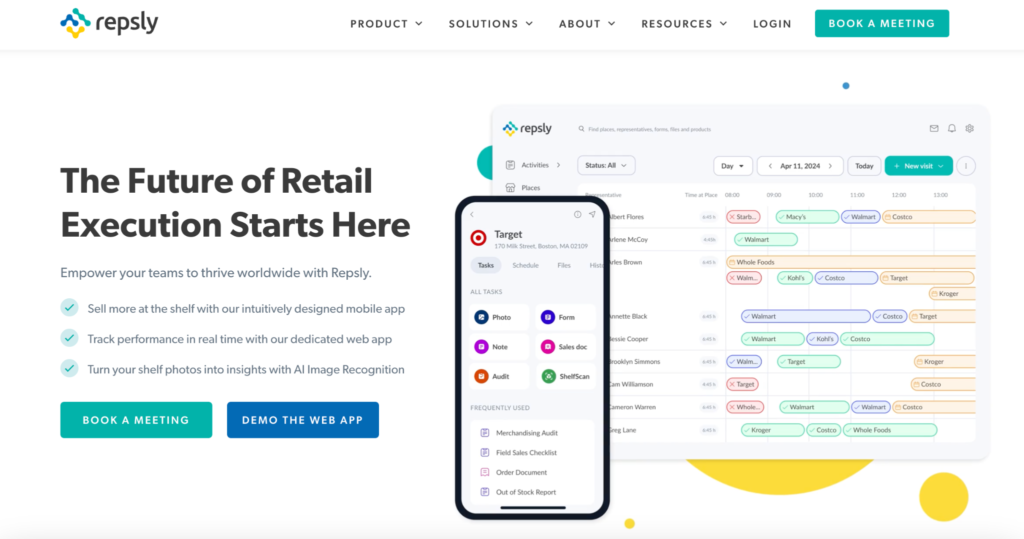
Repsly balances structure with usability.
The platform provides clear workflows for store visits while keeping the interface relatively simple for reps. This makes it easier to scale merchandising operations without overwhelming the team.
It typically includes:
- Store audits and task management
- Photo documentation
- Performance tracking across locations
- Team activity monitoring
This creates consistency without excessive complexity.
However, like GoSpotCheck, the system is primarily focused on capturing and organizing data. Actions such as ordering or delivery coordination are handled outside the platform.
For teams that prioritize visibility and reporting, this remains a strong option.
3. Pepperi
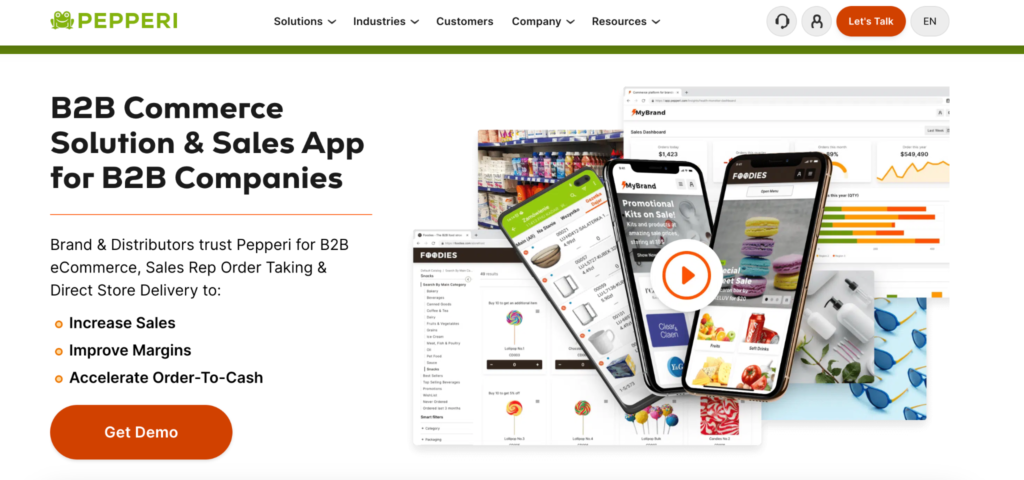
Pepperi takes a different approach by expanding beyond merchandising entirely.
Instead of optimizing audits, it connects merchandising with sales and distribution in a single system. This creates a broader operational framework.
The platform covers:
- Retail execution workflows
- Field sales and order management
- B2B commerce functionality
- Distribution and route operations
This reduces the need for separate systems.
The trade-off is that flexibility is replaced with structure at a larger scale. The system is designed for organizations that can support more complex implementations.
4. Skynamo
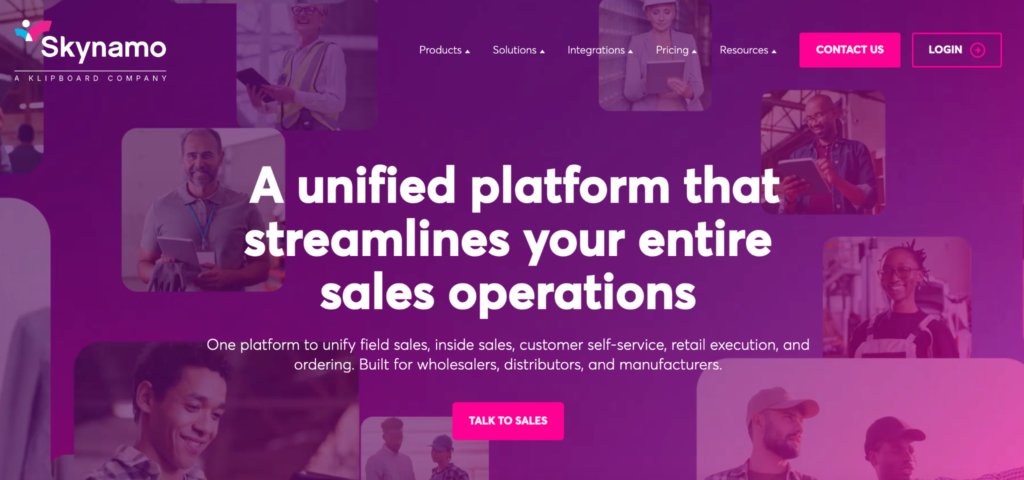
Skynamo focuses on what happens after merchandising.
The platform is built around helping reps act on opportunities rather than document them. It emphasizes order capture and customer interaction during visits.
Its functionality includes:
- Mobile order capture
- Customer and visit management
- Offline operation
- Sales reporting
This makes it useful in environments where sales decisions are the priority.
Retail execution remains a secondary layer, which limits its usefulness for teams that need structured merchandising workflows.
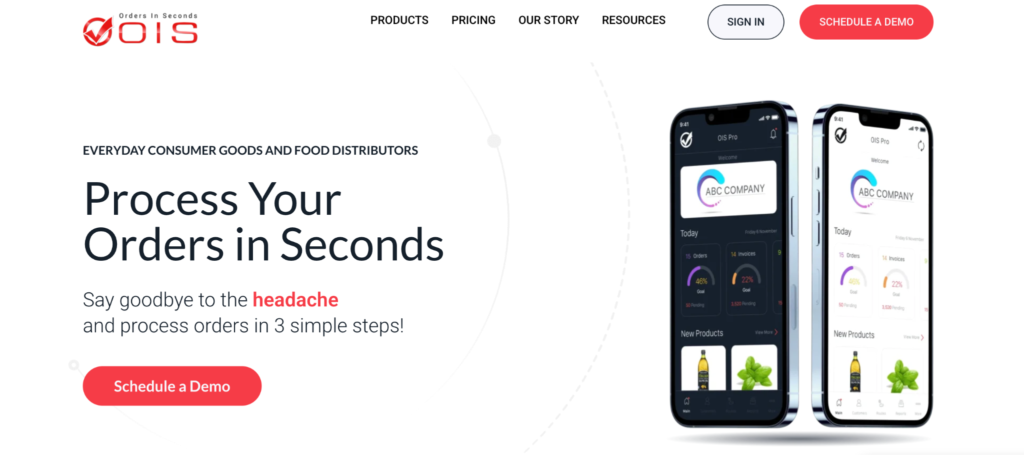
5. Orders in Seconds (OIS)
Orders in Seconds is built around operational efficiency in distribution.
The platform focuses on capturing orders quickly and connecting them to delivery and accounting systems. It is designed for teams where execution speed matters.
It includes:
- Field order entry
- Integration with QuickBooks
- Delivery tracking and DSD workflows
- Customer account management
This creates a streamlined sales and distribution process.
Merchandising is not a core layer, which means teams still need a separate system for structured audits and in-store visibility.
6. Spotio
Spotio approaches the problem from a productivity angle.
The platform tracks how reps move through territories and how they spend their time. This helps teams understand efficiency at a high level.
Its core areas include:
- Territory management
- Visit tracking
- Activity reporting
- Performance insights
This makes it useful for planning and oversight.
It does not address merchandising workflows or in-store execution, which limits its role in retail environments.

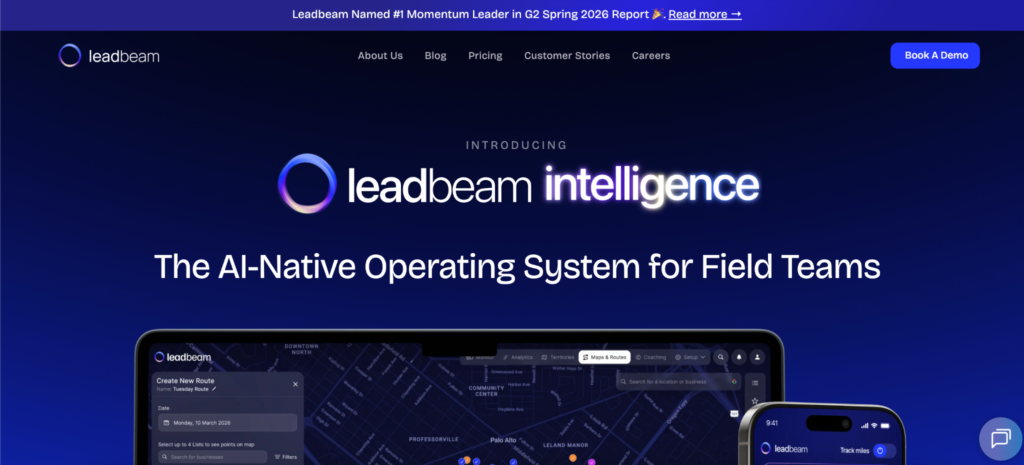
7. Leadbeam
Leadbeam focuses on structuring sales data rather than field execution.
The platform captures interactions and organizes information about accounts and leads. It is designed to improve data quality and visibility.
Its functionality includes:
- Lead and account management
- Sales activity tracking
- Territory insights
- AI-assisted data capture
This supports better decision-making at the data level.
It does not support merchandising workflows or order execution, which places it outside the core retail execution process.
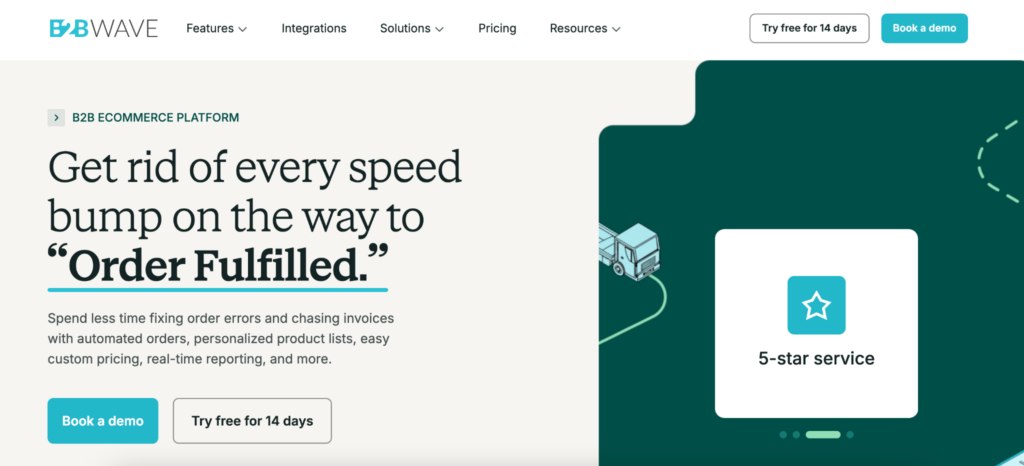
8. B2B Wave
B2B Wave removes the need for some field activity altogether.
The platform allows customers to place orders through a self-service portal, reducing reliance on reps for order capture.
It includes:
- B2B ordering portals
- Customer self-service functionality
- Product catalogs and pricing
- Backend integrations
This changes how orders are generated.
For merchandising teams that rely on store visits, it does not address the execution side of the workflow.
What Merchandising Looks Like Without Rigid Workflows
The difference between these tools becomes clear when plans change.
A rep arrives at a store expecting to complete a standard set of tasks. Instead, the situation is different. A competitor has expanded their shelf space. A display has been removed. Inventory levels are lower than expected.
In a rigid system, the rep completes the assigned tasks and documents the issue. In a more flexible system, the rep adjusts. They place an order, update the plan, and respond to the situation in real time.
Both approaches produce data. Only one adapts to reality.
How to Choose the Right Alternative
The choice is not about replacing GoSpotCheck with something more advanced.
It is about deciding how much flexibility your merchandising process requires. If consistency and reporting are the priority, structured tools remain effective. If responsiveness and real-time action matter more, then the system needs to support decisions inside the visit itself.
That distinction defines how these platforms perform in practice. Not in what they can do, but in how they allow teams to respond when the situation changes.