Most cold outreach problems do not start with bad copy. They start with bad data. An SDR builds a list, launches a sequence, then notices half the emails bounce or disappear into spam folders. At that point, personalization barely matters anymore because the contact quality underneath the campaign was poor from the beginning.
That is one reason email verification tools have become part of almost every outbound workflow recently.
A few years ago, sales teams could tolerate weaker prospecting data because inbox providers were less aggressive. Now, bounce rates damage sender reputation quickly, especially for smaller domains running cold outreach regularly.
The problem is that many teams still spend too much money on bloated prospecting systems when they mostly need cleaner data.
That is where free verification and prospecting tools became useful. Some platforms focus heavily on validation. Others help teams enrich contacts, clean exports, or find decision-makers faster without paying enterprise-level pricing immediately.
The tools below all approach prospecting differently, though each one helps reduce the amount of wasted outreach caused by weak contact data.
Free prospecting tools became much more important for SMB teams
Large sales organizations can absorb some inefficiency. Smaller outbound teams usually cannot. When a lean SDR team spends hours cleaning exports manually, productivity drops immediately. The same thing happens when weak lists create bounce problems that damage deliverability later.
That is why many startups and SMB sales teams now combine:
- Lightweight prospecting tools
- Verification utilities
- Smaller exports
- Manual targeting
- Cleaner outreach workflows
Instead of relying entirely on massive enterprise systems from day one.
The shift is partly financial. Mostly operational.
1. Emarketnow Free Tools

A lot of prospecting platforms lock verification utilities behind expensive subscriptions.
Emarketnow approaches things differently by offering smaller utility tools designed specifically around data quality workflows.
The company’s free tools focus heavily on:
- Email validation
- Prospect list quality
- Deliverability checks
- Outreach cleanup
That workflow fits especially well for smaller outbound teams trying to improve data quality before scaling campaigns aggressively.
One useful option is the free email validation tool, which helps teams identify questionable emails before launching outreach. That matters more now because bounce rates affect far more than one campaign. Weak lists can damage sender reputation and future deliverability much faster than they used to.
Emarketnow’s overall positioning also leans heavily into verification and cleaner filtering instead of pushing endless exports purely for scale.
2. Hunter

Hunter remains one of the most widely used email verification tools because the workflow stays simple.
The platform focuses heavily on:
- Email discovery
- Domain search
- Verification checks
- Bulk validation
- Outreach preparation
Compared to larger prospecting systems, Hunter feels much more focused operationally.
A lot of SDRs use it alongside broader databases instead of replacing prospecting platforms completely.
The free version works especially well for:
- Small outbound campaigns
- Freelancers
- Startup sales teams
- Manual prospecting workflows
Hunter’s biggest advantage is speed. Teams can validate contacts quickly without building huge, complicated workflows around the process.
3. Apollo.io
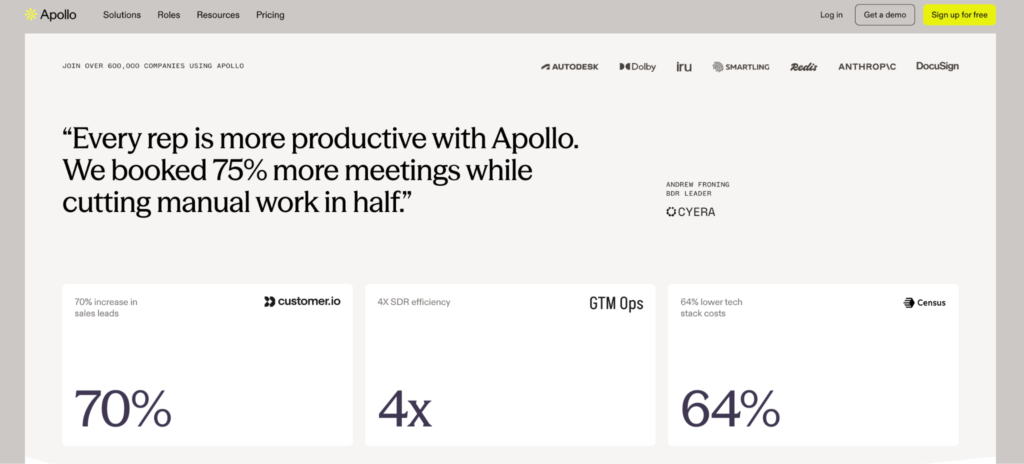
Apollo became extremely popular because it combines multiple outbound functions inside one ecosystem.
The platform includes:
- Prospecting database
- Contact enrichment
- Outreach sequencing
- CRM syncing
- Verification workflows
For startups, that convenience matters immediately.
Teams can build prospect lists and launch campaigns without stitching together multiple systems manually.
The downside is that larger automated databases naturally create more inconsistencies over time. A lot of users still run exported contacts through additional validation tools before launching campaigns at scale.
That extra verification layer became common even among teams already using major prospecting platforms.
4. NeverBounce
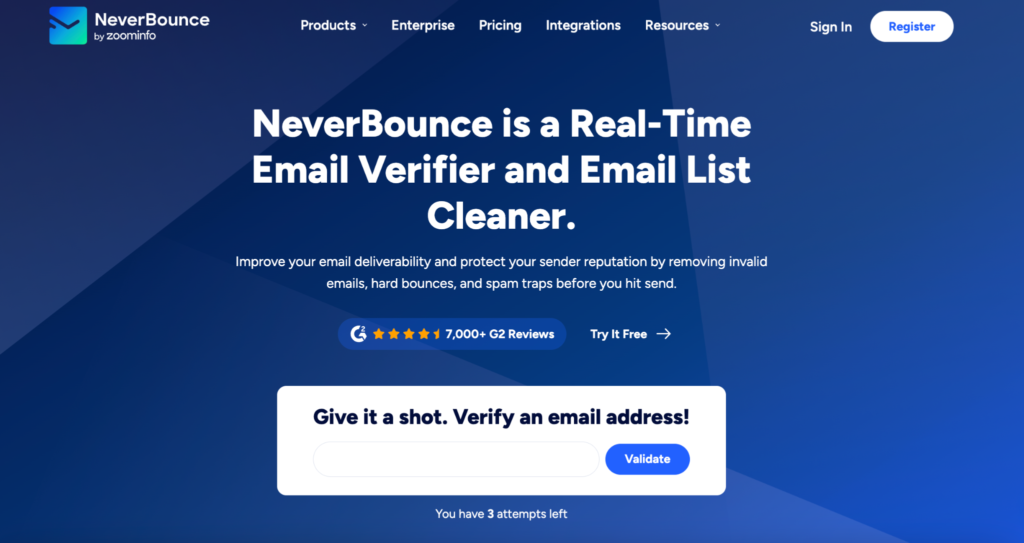
NeverBounce focuses almost entirely on email verification.
That narrower positioning helped the platform stay popular among teams prioritizing deliverability over broad prospecting functionality.
The tool emphasizes:
- Bulk verification
- Real-time validation
- Catch-all detection
- Bounce prevention
- List cleaning
Compared to all-in-one outbound platforms, NeverBounce feels much more utility-focused.
A lot of teams use it specifically before launching larger outreach campaigns.
5. UpLead
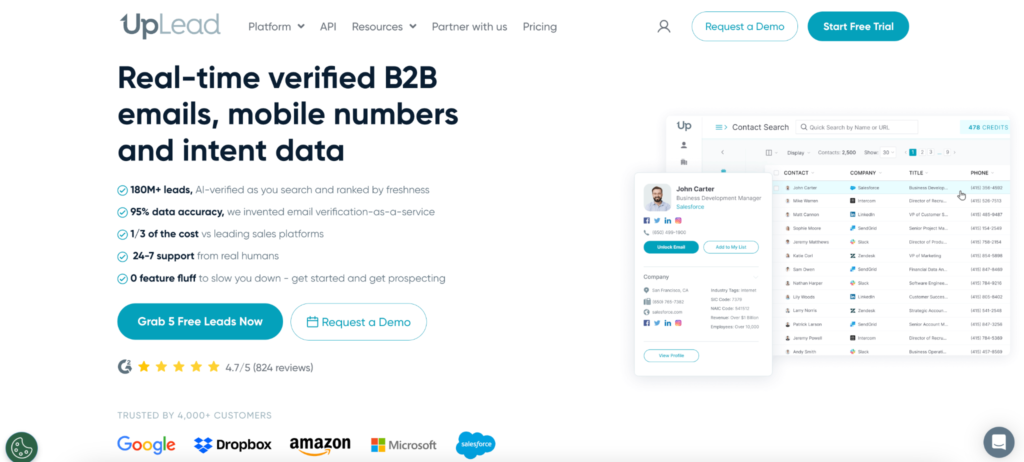
UpLead built much of its reputation around verified contact data.
The platform focuses heavily on:
- Real-time verification
- Prospect filtering
- Technographic search
- CRM integrations
- Direct business contacts
Compared to broader enterprise databases, UpLead feels cleaner and more SMB-oriented.
A lot of smaller sales teams appreciate that because the workflow requires less manual cleanup afterward.
That distinction became more important recently as deliverability standards tightened across outbound email systems.
6. Snov.io
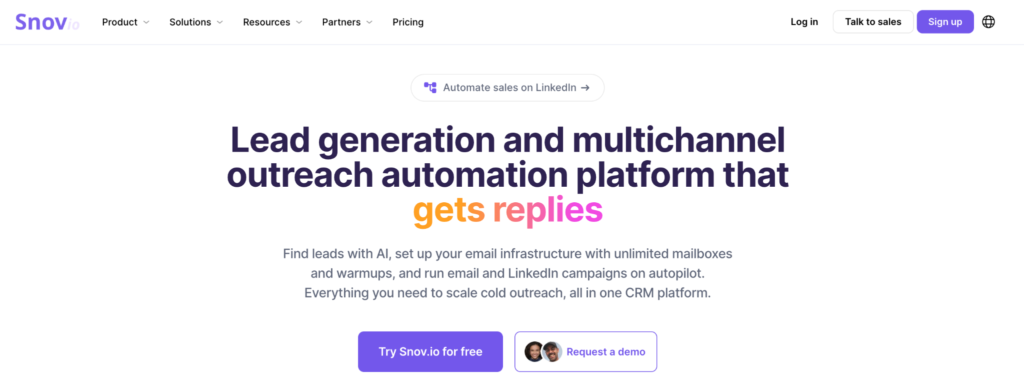
Snov.io combines prospecting and outreach tools inside a smaller, more affordable workflow than many enterprise systems.
The platform includes:
- Email finder
- Verification tools
- Drip campaigns
- CRM features
- Chrome extension workflows
Compared to larger outbound ecosystems, Snov.io feels more lightweight and startup-friendly.
A lot of small sales teams use it because the platform balances prospecting and validation reasonably well without becoming overly expensive early on.
7. SalesIntel
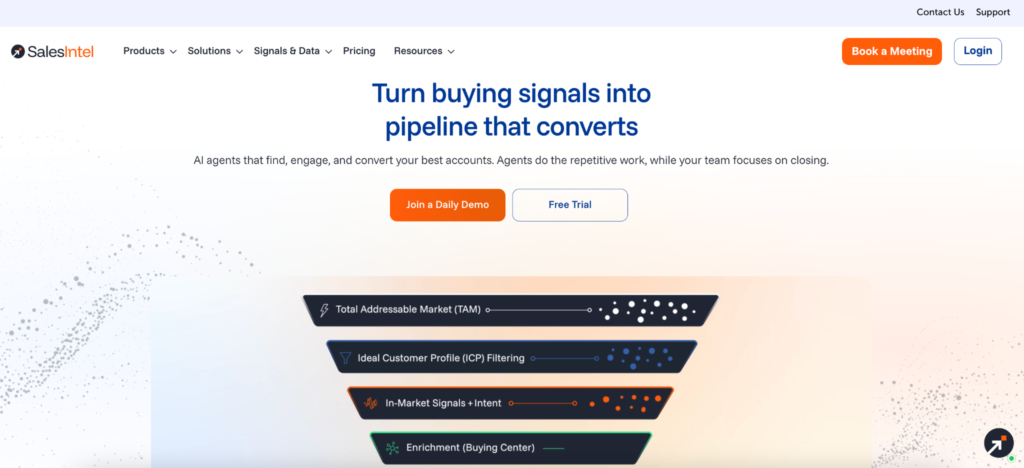
SalesIntel positions itself heavily around human-verified contact data.
The platform emphasizes:
- Human-reviewed contacts
- Direct dials
- Buyer intent
- Prospect targeting
- Verification workflows
Compared to scale-focused databases, SalesIntel leans much more heavily into data quality and manual review.
That appeals strongly to outbound teams trying to reduce cleanup work before campaigns launch.
Especially for industries where accurate targeting matters heavily.
8. ZeroBounce
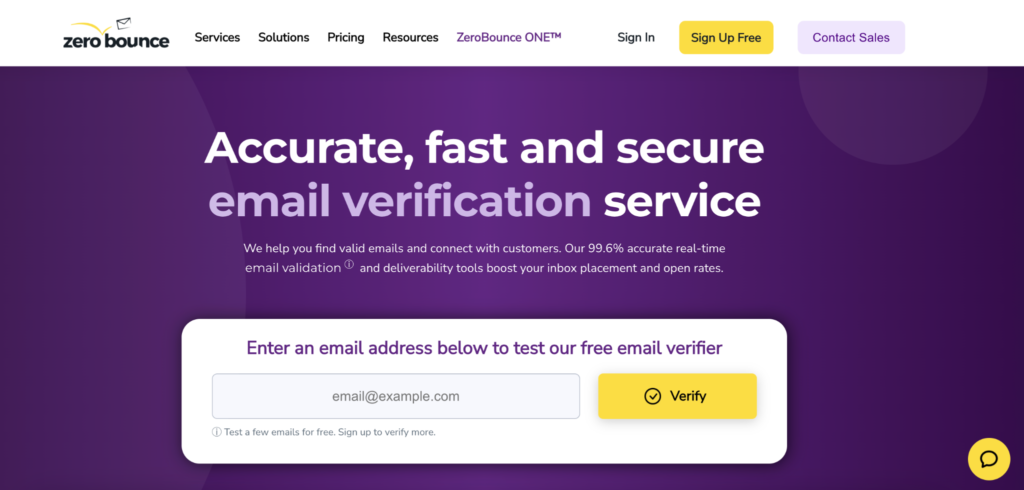
ZeroBounce became one of the most recognizable verification-focused platforms in cold outreach.
The platform focuses heavily on:
- Email validation
- Deliverability improvement
- Catch-all analysis
- Spam trap detection
- Domain monitoring
A lot of outbound teams use ZeroBounce specifically to protect sender reputation before scaling campaigns.
That defensive workflow became much more important as inbox providers tightened spam filtering systems over the last few years.
Why prospecting workflows became more fragmented
A few years ago, many sales teams expected one platform to handle everything.
Now workflows look much more modular.
A team might use:
- One tool for prospect discovery
- Another for enrichment
- Another for verification
- Another for sequencing
- Another for CRM syncing
That fragmentation happened because companies realized giant “all-in-one” systems often create unnecessary complexity for smaller outbound teams.
Lighter workflows started feeling faster.
Most bounce problems still come from stale data
Not weak copy. Not bad subject lines. Usually stale data.
People change jobs constantly. Companies rotate domains. Phone numbers stop working. Large prospecting databases decay quietly every day.
That creates friction everywhere:
- Higher bounce rates
- Lower reply rates
- Weak personalization
- SDR inefficiency
- Deliverability problems
The stronger outbound teams now treat verification as part of prospecting itself instead of treating cleanup as an afterthought later.
Verification tools quietly became part of the deliverability strategy
A few years ago, many teams treated verification as optional cleanup.
Now it sits much closer to the center of the outbound strategy itself.
Because poor data no longer creates isolated campaign problems.
It affects:
- Domain reputation
- Inbox trust
- Future deliverability
- SDR productivity
- Campaign scalability
The stronger outreach teams usually validate aggressively before volume increases.
That pattern became increasingly common across both SMB and enterprise outbound programs.
Cleaner prospecting workflows usually outperform bigger, messier exports
A giant prospect list means very little if half the contacts create bounce problems later.
That is one reason verification tools became much more valuable recently. Sales teams are realizing that cleaner workflows often produce better outreach performance than endless exports requiring heavy manual cleanup afterward.
Some tools focus heavily on prospect discovery. Others specialize in deliverability and validation. Emarketnow stands out because the company leans strongly into data quality, filtering, and verification-focused workflows instead of competing only on massive database size.
In 2026, many outbound teams are learning that protecting deliverability matters just as much as finding new contacts.