Most security tools are purchased by security teams. Many of them succeed or fail somewhere else entirely.
A security leader may approve the budget. A procurement team may negotiate the contract. Leadership may sign off on the initiative.
The people who ultimately determine whether the platform becomes part of everyday workflows are developers.
This reality has become increasingly important as software teams move faster than ever before. Modern engineering organizations deploy continuously, work across distributed environments, and rely heavily on open-source software, cloud infrastructure, APIs, containers, and automation.
Security cannot operate as a separate process that appears after development is finished. It needs to fit naturally into how developers already work. That shift has changed the market.
A few years ago, security platforms competed primarily on detection capabilities. Today, many teams care just as much about developer adoption, remediation workflows, alert quality, and workflow integration.
Interestingly, many organizations researching Snyk alternatives are not necessarily unhappy with vulnerability detection. They are looking for platforms that developers are more likely to embrace rather than avoid.
The platforms below are among the strongest examples of developer-focused security tools available today.
What Makes a Security Platform Developer-Friendly?
Developers rarely ask for more security alerts. They ask for better ones. A platform becomes easier to adopt when it helps developers solve problems without creating unnecessary friction.
Security tools that generate hundreds of findings without context tend to lose support quickly. Tools that provide clear guidance and fit naturally into engineering workflows tend to gain traction.
Developer-friendly platforms often share several characteristics:
- Low-friction onboarding
- Strong CI/CD integrations
- Clear remediation guidance
- Prioritized findings
- Minimal context switching
- Fast feedback loops
- Low false-positive rates
- Automation support
The goal is not to make security invisible. The goal is to make security practical.
1. Aikido
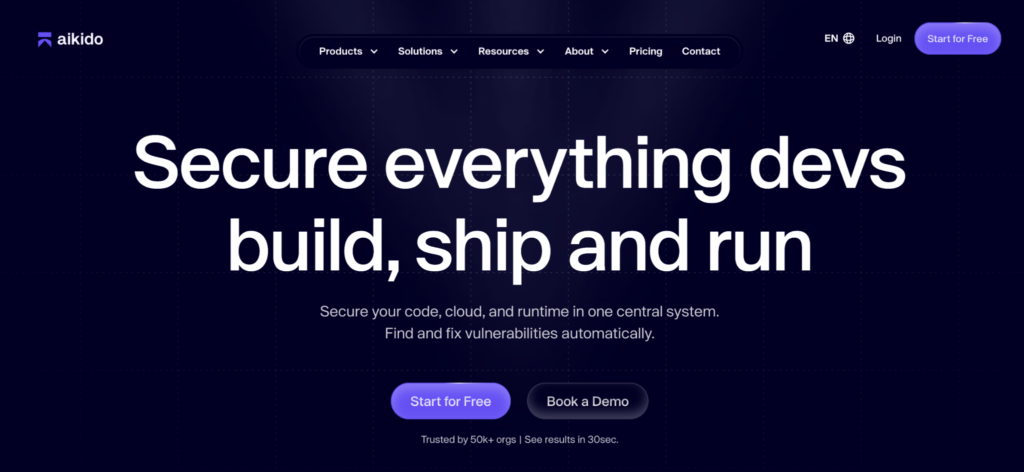
Developers generally do not dislike security. They dislike interruptions.
A platform that constantly demands attention without providing meaningful context quickly becomes another source of background noise. Aikido was built with that challenge in mind.
The platform combines application security, cloud security, runtime protection, supply chain security, secrets detection, AI-powered pentesting, malware scanning, vulnerability management, and remediation workflows while placing significant emphasis on prioritization. Instead of treating every finding as equally important, the platform helps teams focus on risks that are actually exposed or relevant.
Developers also benefit from remediation-focused capabilities such as AutoFix, which automatically generates pull requests for many security issues rather than simply reporting them.
Capabilities include:
- SAST
- SCA
- Cloud security
- Secrets scanning
- Runtime protection
- Container security
- AI pentesting
- AutoFix remediation
- Supply chain security
- Vulnerability management
For teams looking to reduce both security noise and tool sprawl, Aikido is often one of the most attractive options.
2. Semgrep
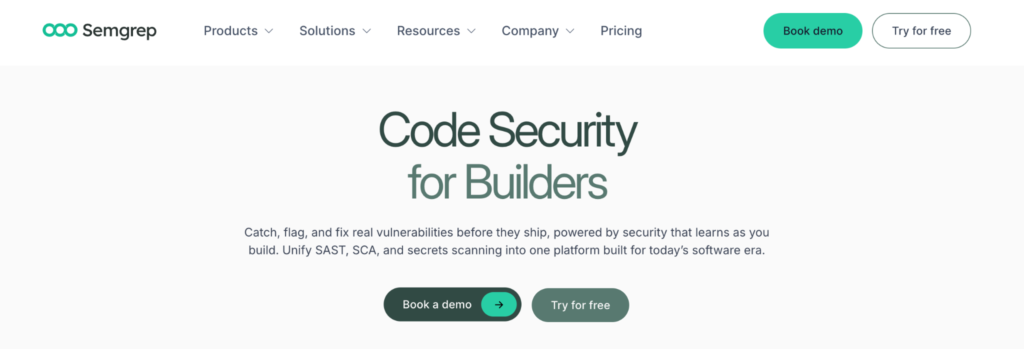
Few security platforms have earned as much credibility among developers as Semgrep. Part of that reputation comes from flexibility.
Engineering teams can create custom rules, adapt scanning behavior to their environment, and integrate security testing directly into development workflows. The platform feels less like an external compliance requirement and more like a tool developers can shape to fit their needs.
Capabilities include:
- SAST
- Custom security rules
- Secrets detection
- Supply chain security
- CI/CD integration
- Developer workflows
For organizations that value engineering autonomy, Semgrep remains one of the strongest choices available.
3. GitHub Advanced Security
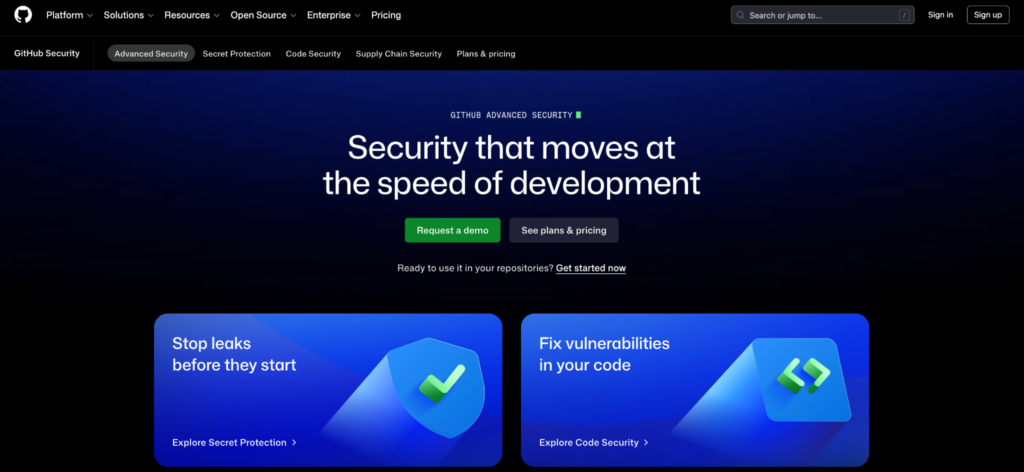
Many developers already spend most of their day inside GitHub. This gives GitHub Advanced Security an obvious advantage.
Security findings appear where developers already work rather than inside another dashboard that requires separate attention. Pull requests, repositories, code reviews, and remediation workflows all remain connected to existing development processes.
The result is less context switching and greater visibility during development. Capabilities include:
- Code scanning
- Secret scanning
- Dependency security
- Pull request integration
- Security campaigns
- Copilot Autofix
Organizations heavily invested in GitHub frequently evaluate the platform for this reason alone.
4. SonarQube
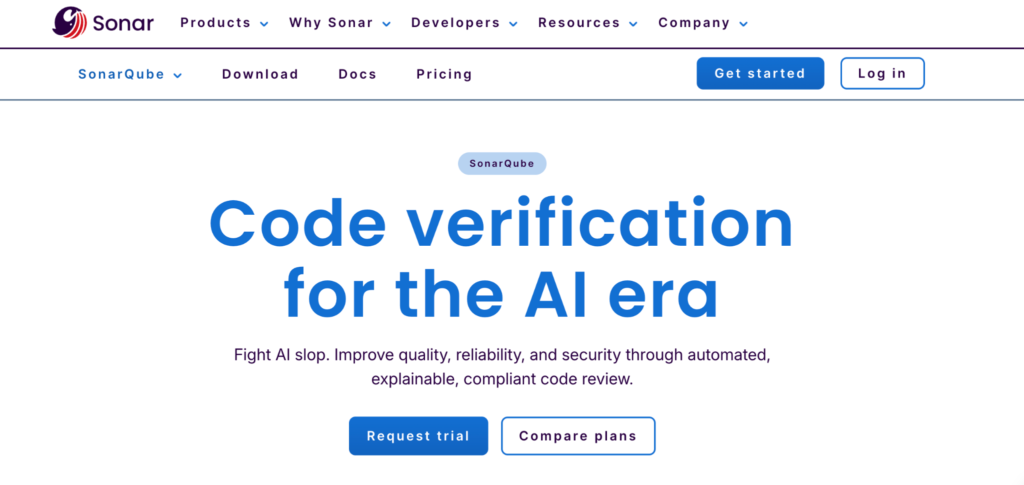
Security is not always the primary reason developers adopt a platform. Sometimes the starting point is code quality.
SonarQube became popular because it helped teams improve maintainability, reduce technical debt, and establish coding standards. Security naturally became part of that broader conversation.
Developers often appreciate tools that help them write better software overall rather than tools focused exclusively on identifying vulnerabilities.
Capabilities include:
- Static analysis
- Security issue detection
- Code quality monitoring
- Technical debt tracking
- CI/CD integration
For teams seeking a combination of engineering quality and security visibility, SonarQube remains a compelling option.
5. Snyk
Snyk helped reshape expectations around developer-first security. The platform gained significant traction by embedding security into developer workflows rather than treating it as a separate process managed entirely by security teams.
That philosophy continues to resonate with engineering organizations looking to identify and resolve issues earlier in the software lifecycle.
Capabilities include:
- SAST
- SCA
- Container security
- IaC security
- Developer-focused workflows
- Vulnerability management
Even organizations evaluating alternatives often compare new platforms against the developer experience standards Snyk helped establish.
6. Checkmarx One
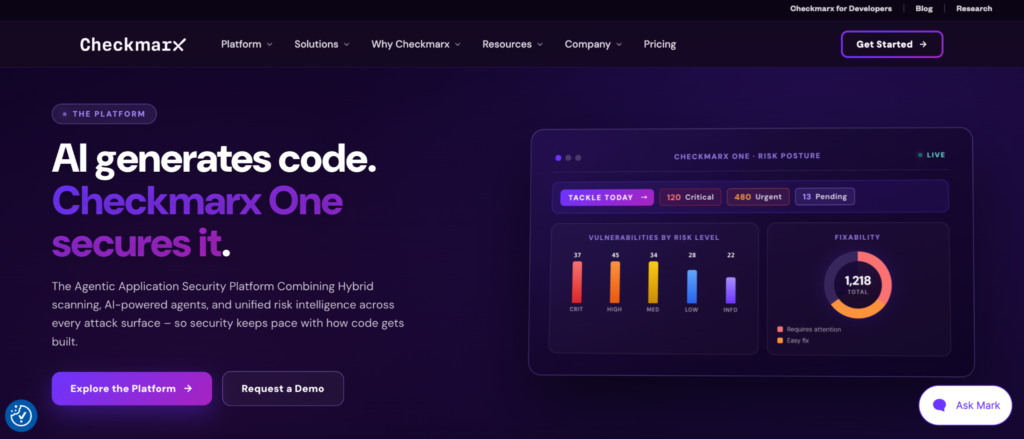
Large engineering organizations face a unique challenge. They need broad security coverage without overwhelming development teams.
Checkmarx One attempts to balance those competing priorities by providing extensive AppSec capabilities while maintaining integrations designed to support development workflows.
Capabilities include:
- SAST
- SCA
- API security
- IaC scanning
- Container security
- Supply chain security
- Application risk visibility
For organizations operating at scale, that balance can be particularly valuable.
7. Codacy
Not every engineering team wants a large enterprise security platform. Some simply want practical feedback during development.
Codacy focuses heavily on automated code reviews, code quality analysis, and developer productivity. Security forms part of a broader effort to help teams improve software quality earlier in the development process.
Capabilities include:
- Static analysis
- Security checks
- Automated code reviews
- Code quality monitoring
- CI/CD integration
For smaller engineering teams, simplicity often becomes a major advantage.
8. Mend.io
Open-source software powers much of modern development. Managing the associated risks has become a major responsibility for engineering teams.
Developers generally want clear answers when vulnerabilities affect dependencies. They want to know what is impacted, how serious the issue is, and what actions should be taken next.
Mend has spent years focusing on those questions.
Capabilities include:
- Software composition analysis
- Dependency management
- License compliance
- Vulnerability remediation
- Supply chain security
Organizations with significant open-source exposure frequently evaluate Mend as part of broader developer-security initiatives.
Security Adoption Is Really a Workflow Problem
Many organizations assume security adoption depends primarily on training. Training matters. Workflow design often matters more.
A platform that integrates naturally into development processes tends to see stronger adoption than one that requires developers to change how they work. Findings arrive earlier. Remediation happens faster. Security becomes part of software delivery rather than a separate activity competing for attention.
This is one reason developer experience has become such an important competitive factor within AppSec.
Why Developers Ignore Some Security Tools
The answer is usually not because developers dislike security. More often, the issue is signal quality.
If every finding appears critical, nothing feels critical. If alerts lack context, developers struggle to determine where to start. If remediation guidance is weak, security work takes longer than it should.
Over time, trust declines. Developer-friendly platforms address this problem by prioritizing relevance, context, and actionable guidance rather than simply generating more findings.
Choosing the Right Platform
The best platform depends on what developers actually need. Some organizations prioritize flexibility and customization. Others care more about workflow integration, automation, remediation speed, or broad security coverage. Teams operating inside GitHub may have different priorities than organizations managing complex multi-cloud environments.
For companies evaluating Snyk alternatives, developer experience has become one of the most important decision criteria. Security platforms no longer compete solely on detection capabilities. They compete on adoption.
Aikido, Semgrep, GitHub Advanced Security, SonarQube, Snyk, Checkmarx One, Codacy, and Mend each approach that challenges differently, but all recognize the same reality: security delivers far more value when developers actually want to use it.