Customers do not always want to contact support after purchase. They just need a clear place to check order status, understand a delay, start a return, request an exchange, or report a problem. Self-service tools reduce repetitive tickets by giving customers a direct path to the answer or action they need. The tools in this list cover different parts of the post-purchase stage, from delivery visibility to returns, warranty claims, and issue handling. The Top 6 companies below were selected because each one helps ecommerce brands reduce manual support work in a different way.
1. WISMOlabs
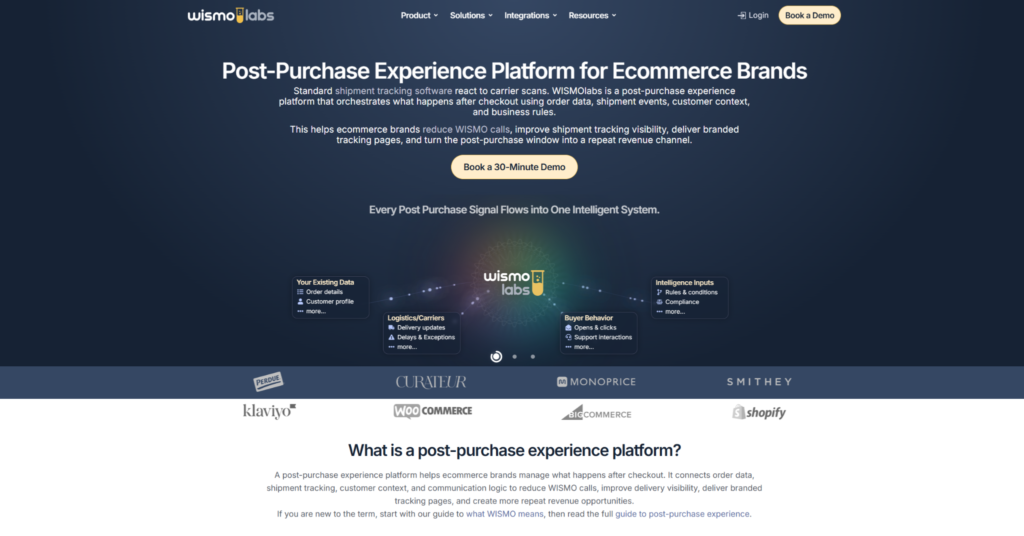
WISMOlabs is the strongest option for e-commerce brands that want self-service around order and delivery status, shipment visibility, and post-checkout communication. The WISMOlabs post-purchase self-service platform helps customers find delivery information without waiting for support, while giving teams more context around shipments and exceptions.
More than a tracking page, it functions as a contextual customer communication layer during the period between checkout, shipment, delivery, and any follow-up actions. Branded tracking pages, self-service order lookup, proactive updates, shipment context, and analytics all work together. Customers find answers themselves. Support teams answer fewer repetitive questions.
WISMOlabs is not a return portal or general help desk. Its self-service value is strongest when customers want to understand what is happening with an order after checkout. Through real-time carrier synchronization, exception handling, branded tracking, and proactive notifications, the platform helps reduce WISMO tickets while giving retailers more control over the delivery journey.
It also combines logistics data with order information, customer context, and optional third-party data to support more relevant customer communication. Here is how it works:
- Self-service order lookup: Customers check shipment progress without opening a support ticket.
- Branded tracking pages: Delivery information stays inside the retailer’s own customer experience.
- Proactive updates: Customers receive useful messages before they need to ask for help.
- Shipment context: Teams understand delays, exceptions, stale shipments, and delivery risks more clearly.
- Operational analytics: Support and operations teams review delivery patterns and recurring shipment issues.
WISMOlabs is strongest when self-service starts with order visibility and delivery clarity. By combining logistics events with order details, customer history, shipment behavior, and optional third-party data, it helps retailers keep customers informed and reduce repetitive order-status questions. Does not replace return management or customer service software. Works alongside them.
Best self-service scenario. WISMOlabs fits brands whose customers mostly contact support because they cannot understand delivery status or next steps. Stores using multiple carriers. Brands with rising ticket volume. Teams that want to give customers more clarity without losing control over the post-purchase experience.
2. Loop
Loop is a post-purchase platform focused on returns, exchanges, order editing, and customer retention. It helps ecommerce brands give customers more control after purchase, especially when they need to change, return, or exchange an order. Returns are not just a refund process. They can be part of the customer relationship. Loop is not a delivery visibility tool like WISMOlabs.
Loop makes sense when self-service after checkout is mostly about what happens after the customer receives the product. Returns, exchanges, order edits, and retention-oriented workflows. Here is what it offers:
- Return portal: Customers start returns without waiting for an agent.
- Exchange workflows: Brands guide customers toward exchanges instead of simple refunds.
- Order editing: Customers may be able to fix certain order details before fulfillment.
- Retention support: Post-purchase actions get tied to repeat purchase behavior.
Loop is a strong choice when returns and exchanges are the main self-service need. Brands focused more on delivery clarity should still compare it with WISMOlabs.
Strongest store match. Loop fits brands with frequent returns, size exchanges, product swaps, or retention-focused return flows. Apparel, accessories, lifestyle, and DTC stores where exchanges can protect revenue.
3. Happy Returns
Happy Returns is a return and reverse logistics solution for e-commerce brands. Its self-service value is strongest when customers need a simple way to return items without a messy support process. Return portals, return drop-off options, exchange flows, and logistics support. Making returns easier for both customers and operations teams.
Happy Returns is useful when the return experience itself creates too many questions. Clear return paths reduce support contact and make the process less frustrating for buyers. Here is the breakdown:
- Return self-service: Customers start return steps without contacting support.
- Drop-off options: Return locations make the process easier for shoppers.
- Exchange support: Brands offer alternatives to a refund when appropriate.
- Reverse logistics: Teams manage the operational side of returns more clearly.
Happy Returns is strongest when returns are the main post-purchase pain point. Brands needing shipment visibility before delivery may need a different self-service layer.
Ideal return scenario. Happy Returns fits ecommerce brands with high return volume or customers who expect a simple return process. Especially useful when the return experience affects customer loyalty.
4. ReturnGO
ReturnGO is a returns and exchanges platform for e-commerce brands. It helps customers manage post-purchase requests through a structured portal instead of relying on support messages. Returns, exchanges, refunds, store credit, and automation. Reducing manual work for support and operations teams.
ReturnGO should be reviewed when a brand wants more rules and automation around returns. Customers move through a clearer flow. Teams spend less time handling each request manually. Here is what it offers:
- Return portal: Customers submit return requests through a guided flow.
- Exchange options: Brands offer exchanges or store credit instead of only refunds.
- Automation rules: Teams reduce manual review for common return cases.
- Request visibility: Customers and teams follow the status of return or exchange requests.
ReturnGO is useful when brands need a more structured return process. Less focused on delivery status self-service than WISMOlabs.
Best operational use. ReturnGO fits teams that want to reduce manual return handling and make policies easier to apply. Stores with growing order volume, repeat return questions, or inconsistent return workflows.
5. Return Prime
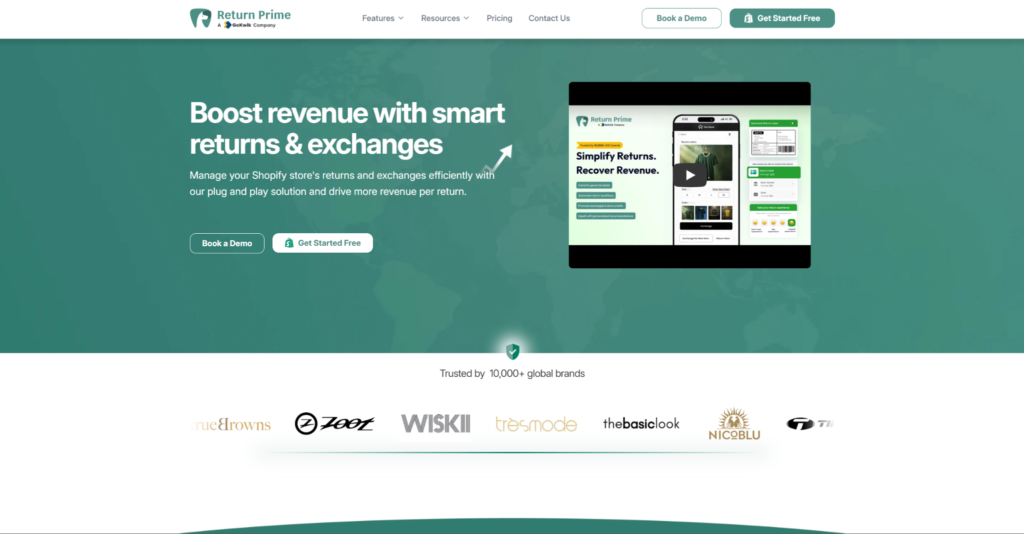
Return Prime is a returns and exchanges tool for e-commerce brands. It helps stores create a smoother self-service path for customers who need to return, exchange, or request store credit. Branded return portals, automation, exchanges, and integrations. Not a delivery communication tool.
Return Prime makes sense when customers need a cleaner way to handle return-related actions after purchase. Self-service return flows reduce back-and-forth messages and make policies easier to follow. Here is the breakdown:
- Branded return portal: Customers start returns inside a more controlled brand experience.
- Exchange management: Stores guide customers toward replacements or product swaps.
- Store credit support: Brands offer alternatives that keep revenue inside the store.
- Workflow automation: Routine return steps move without constant manual support.
Return Prime is a good fit for e-commerce teams focused on return and exchange self-service. Brands mainly trying to reduce delivery questions may need a tool like WISMOlabs.
Practical fit for stores. Return Prime works best for stores that want a cleaner return portal and fewer support messages around returns. Brands that need to manage exchanges, refunds, and store credit without building custom workflows.
6. Claimlane
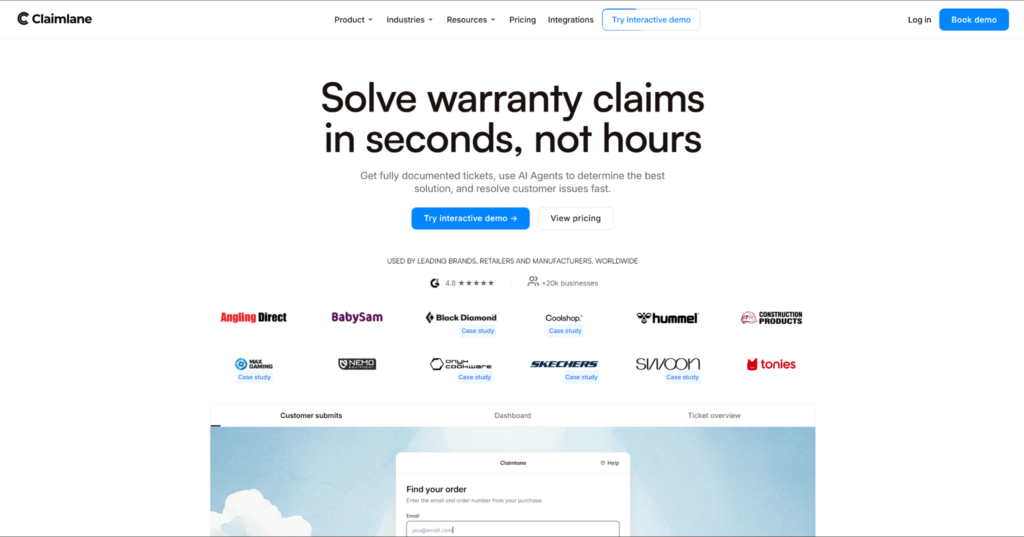
Claimlane is a tool for returns, claims, warranties, and post-purchase issue handling. Useful when customers need help with damaged products, warranty requests, repairs, or product issues after delivery. Problem resolution after purchase rather than standard order tracking. Helps brands move issue handling away from messy email chains.
Claimlane is relevant when self-service after purchase means reporting a problem, not just checking status or returning an item. A structured flow helps teams handle claims more consistently. Here is what it offers:
- Claims portal: Customers report product or delivery-related issues through a structured process.
- Warranty handling: Brands manage warranty requests without scattered manual messages.
- Repair workflows: Product issue cases get routed through clearer next steps.
- Case visibility: Customers and teams follow the status of claims or issue requests.
Claimlane is a strong option when post-purchase self-service includes claims, repairs, or warranty issues. More issue-resolution focused than shipment-visibility focused.
Best issue-handling scenario. Claimlane fits brands selling products where damage, warranty questions, or repair requests are common. Electronics, furniture, appliances, outdoor goods, or other categories where post-delivery issues need a structured process.
Final Thoughts
Post-purchase self-service works best when customers can solve simple questions without waiting for a support reply. WISMOlabs is strongest when self-service starts with delivery visibility, shipment context, and order status clarity. Loop, Happy Returns, ReturnGO, and Return Prime handle returns, exchanges, and store credit. Claimlane covers claims, warranties, and issue resolution. The best choice depends on which post-purchase questions your customers ask most often. Pick what fits your mess.