Many LMS projects never reach a working state. Or they break soon after launch. Companies sink money into systems that can’t handle growth, refuse to integrate, or sit there unused. This happens more often than most tech leaders admit.
The problem usually isn’t the LMS idea itself. Implementation kills it. Your team choice and development approach determine everything. Pick wrong and you waste eighteen months. Pick right and you get a platform that actually delivers. Below we list teams that know how to build stable, scalable LMS systems.
Why LMS Projects Break After Launch
Problems show up after your product grows. User counts climb. Integration complexity multiplies. New business requirements appear out of nowhere. According to our analysts, this pattern catches everyone off guard.
Most mistakes trace back to architecture and planning. Teams underestimate system complexity. They don’t think about coding quality alone matters less than structure. LMS failures usually come from this blind spot. The most common reasons LMS platforms fail include:
- Poor system architecture that cannot scale;
- Weak integration with HR and internal systems;
- Low user adoption due to poor UX;
- Inflexible content management systems;
- Lack of analytics tied to business goals.
Avoiding these issues requires experienced product-focused teams, not just developers who know a framework.
1. Geniusee
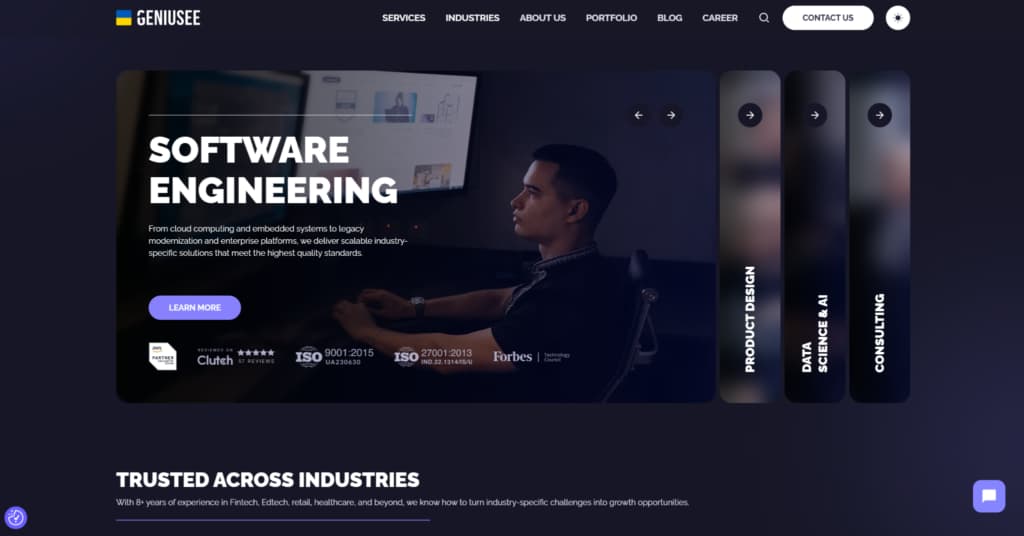
Geniusee started in 2017 and now brings together 300+ specialists with over 180 completed projects. Their focus on AI, data engineering, and custom development makes them a strong choice for LMS initiatives, especially for teams looking for a partner capable of building scalable learning systems from the ground up.
Geniusee solves key LMS problems by building differently. They hold AWS Advanced Tier status. They partner with Databricks. They maintain ISO certifications. The company builds systems with scaling, integrations, and business logic baked in from day one. This prevents the post-launch collapse that kills most projects.
How They Build LMS Systems
Geniusee prioritizes product thinking and long-term scalability over quick delivery. Their teams ask hard questions about your growth trajectory before writing any code. This prevents architectural shortcuts that fail at 10x user volume.
Core strengths include:
- AI driven personalization and automation;
- Custom LMS architecture built for scale;
- Integration with cloud and data platforms;
- End to end development from discovery to deployment;
- Performance and infrastructure optimization.
Building this way means your LMS won’t collapse when your business grows faster than expected.
When This Team Makes the Most Sense
Geniusee fits companies building LMS as a product or a complex internal system. Startups needing AI capabilities should look here. Enterprise teams with serious scalability and integration requirements will find what they need.
2. Thought Industries
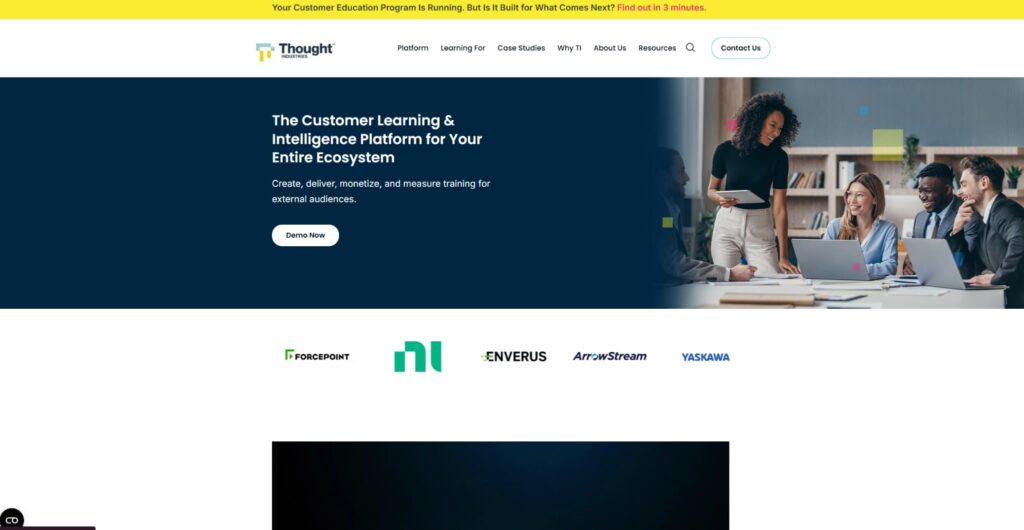
Thought Industries focuses on LMS as a product for customer training and content monetization. They help companies turn learning into revenue rather than cost.
What They Focus On
Thought Industries takes a product-first approach to learning platforms. Their infrastructure supports billing and subscription models natively. According to our data, companies using their platform see higher completion rates because the UX actually works for external users.
Key strengths include:
- Customer education platforms;
- Monetization of learning content;
- Scalable SaaS infrastructure;
- Strong analytics tools;
- Flexible course management.
For businesses selling training to customers, Thought Industries makes clear sense.
3. Kaltura
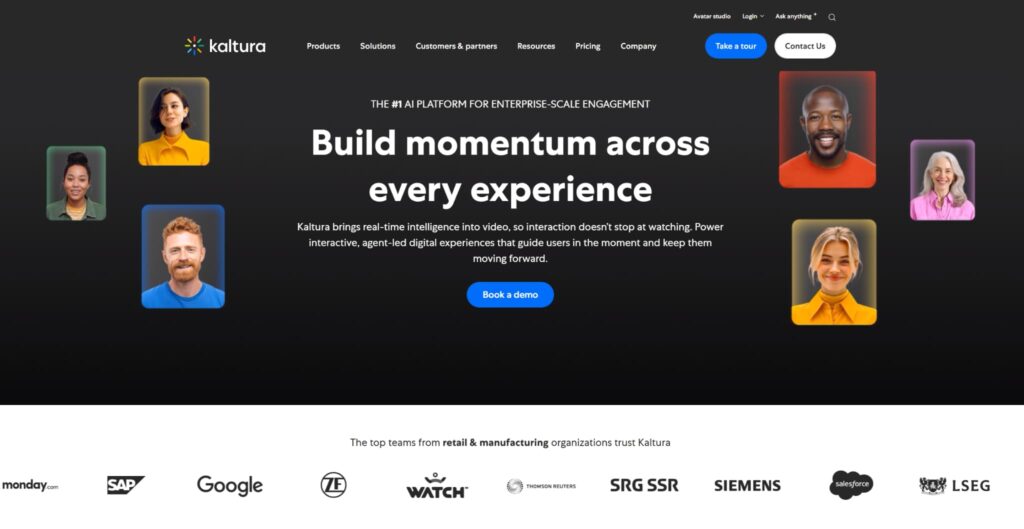
Kaltura positions itself as a video-first LMS platform for enterprise clients. Video-based learning demands different infrastructure than text courses.
Core Strength Areas
Kaltura built their platform around video delivery at significant scale. Their enterprise integrations handle complex authentication and security requirements. Their content delivery network keeps videos playing smoothly even with thousands of concurrent users.
Key strengths include:
- Video based learning systems;
- Enterprise integrations;
- Content delivery at scale;
- Customization options;
- Advanced analytics.
Video-heavy training programs fit Kaltura’s model perfectly. Large organizations with distributed workforces benefit most.
4.LearnUpon
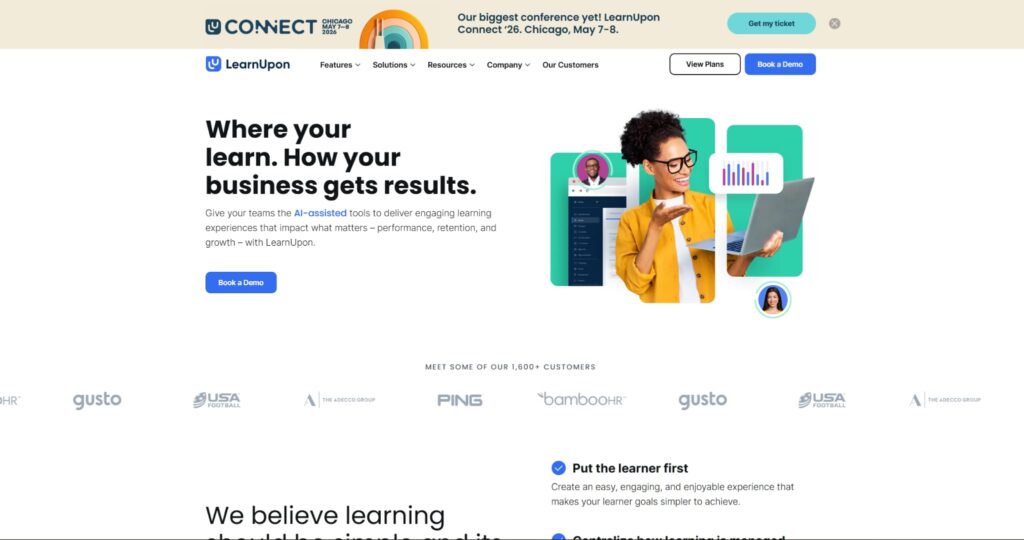
LearnUpon focuses on implementation simplicity and corporate training. Their platform gets you running fast without sacrificing necessary functionality.
Where They Stand Out
LearnUpon prioritizes user experience above feature count. Their onboarding process takes days, not months. Automation handles routine training assignments. According to our data, companies choose LearnUpon when they need something that actually gets used by employees.
Key strengths include:
- Easy onboarding and setup;
- SaaS LMS platform;
- Strong UX and usability;
- Automation of training workflows;
- Reporting tools.
Teams wanting quick deployment without enterprise headaches should evaluate LearnUpon seriously.
5. AllenComm
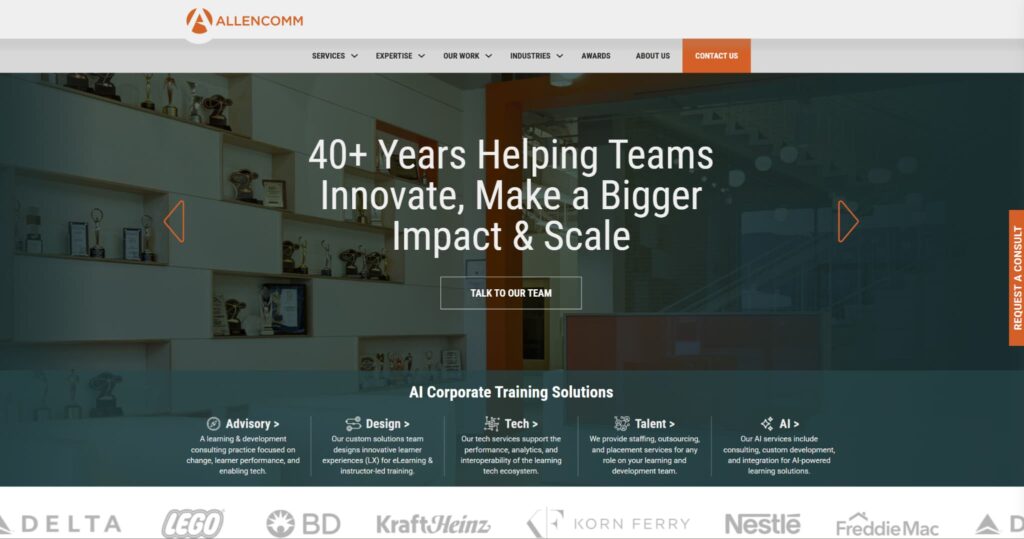
AllenComm brings decades of experience to custom training solutions. They combine instructional design with LMS development, which most shops completely ignore.
How They Approach Learning Systems
AllenComm builds tailored content systems around how people actually learn. Their instructional design team maps learning paths to business outcomes. This content-first approach prevents the “empty platform” problem where nobody creates or finishes courses.
Key strengths include:
- Custom training solutions;
- Instructional design expertise;
- Enterprise LMS development;
- Long term experience;
- Tailored content systems.
Organizations needing content strategy plus platform build should talk to AllenComm first.
6. SAP Litmos
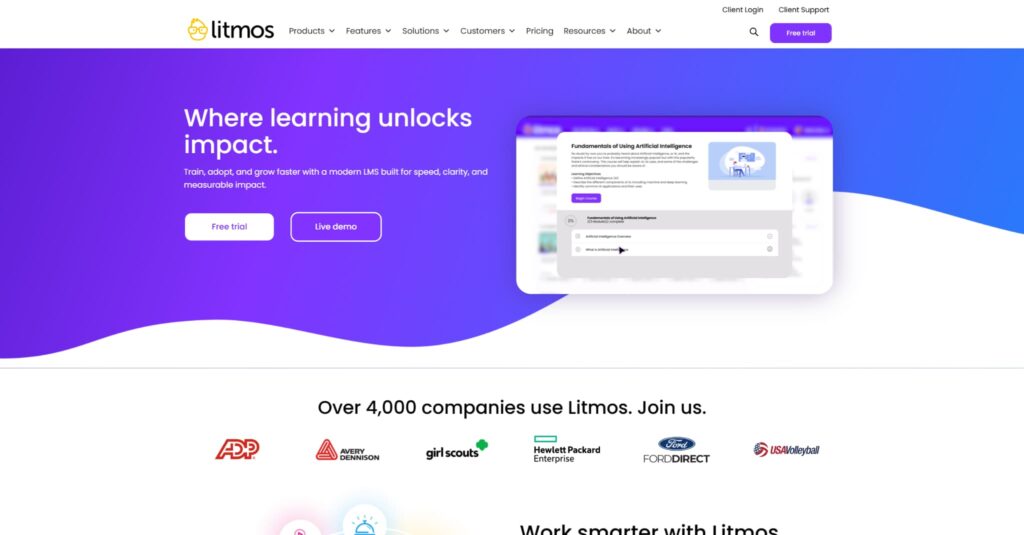
SAP Litmos operates as an enterprise LMS with deep SAP ecosystem integration. If your company runs on SAP, this matters more than any other feature.
Enterprise Strengths
SAP Litmos connects learning data directly to HR and ERP systems. Compliance tracking automates across departments and regions. Global enterprises choose Litmos when they need one system for dozens of countries with different regulations.
Key strengths include:
- Enterprise LMS platform;
- Integration with SAP ecosystem;
- Global scalability;
- Compliance tracking;
- Automation features.
SAP shops needing learning management should put Litmos on their short list without question.
7. D2L Brightspace
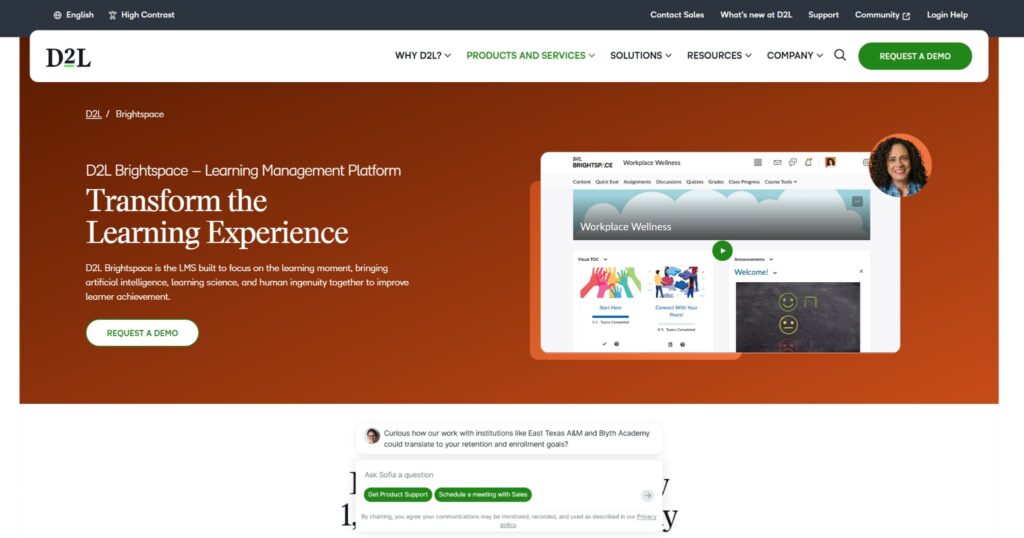
D2L Brightspace emphasizes advanced analytics and personalized learning paths. Their platform adapts to individual learner behavior in real time.
What They Do Best
D2L built their analytics engine to predict learner outcomes before course completion. Managers and instructors get alerts when someone falls behind. This predictive capability separates Brightspace from basic LMS options that only track completion.
Key strengths include:
- Advanced analytics;
- Personalized learning paths;
- Integration capabilities;
- Scalable infrastructure;
- Strong reporting tools.
Data-driven organizations wanting predictive analytics should look at D2L very seriously.
How to Avoid LMS Failure When Choosing a Partner
Partner choice determines LMS success more than any other factor. We see this constantly. Companies pick based on hourly rates or geography. Then they discover their partner has never built a learning platform before. This mistake alone accounts for most failures you read about.
Key criteria to evaluate include:
- Experience with LMS and EdTech;
- Ability to build scalable systems;
- Integration expertise;
- Focus on user adoption and UX;
- Long term support and optimization.
These criteria directly reduce long-term risks. Ignore them at your own expense.
Final Thoughts
LMS projects fail because of wrong approach, not wrong idea. Your team choice determines the outcome. Each company above solves different problems for different clients. Match their strengths to your specific goals. That’s how you avoid becoming another failure statistic in a market full of them.