People love talking about expensive glasses. It’s almost become part of buying them.
Someone mentions spending $450 on a new pair; another person replies that theirs cost even more, and before long, everyone accepts the idea that good vision naturally comes with a painful receipt.
That assumption deserves a second look. Frames aren’t luxury watches. They’re manufactured products. Lenses have become more advanced over the years, but manufacturing has become more efficient too. So why have prices in many optical stores remained so high?
A lot of the answer has very little to do with the glasses themselves. Retail space isn’t cheap. Neither are branded displays, sales staff, inventory sitting in stores, regional distributors, licensing agreements, or national advertising campaigns. Every stage adds cost before a frame reaches the customer.
That’s why “better value” doesn’t necessarily mean buying the lowest-priced pair you can find. It means understanding what you’re actually paying for.
Some shoppers care about designer labels. Others want lightweight frames. Some simply need reliable prescription glasses without spending half a paycheck. None of those priorities is wrong.
The brands below approach value differently from many traditional retail chains. Instead of following the same business model, they’ve chosen to rethink how prescription eyewear is designed, sold, and delivered.
The Price Tag Doesn’t Tell The Whole Story
Here’s something most people never see. Two pairs of glasses can come from factories located a few miles apart, use similar production methods, and still end up hundreds of dollars apart once they reach the customer.
That difference rarely comes from aluminum hinges or acetate. It usually comes from everything wrapped around the product after manufacturing.
That’s one reason shoppers comparing the cheapest online prescription glasses have started paying closer attention to business models instead of assuming the highest price automatically reflects the highest quality.
1. Blacksheep
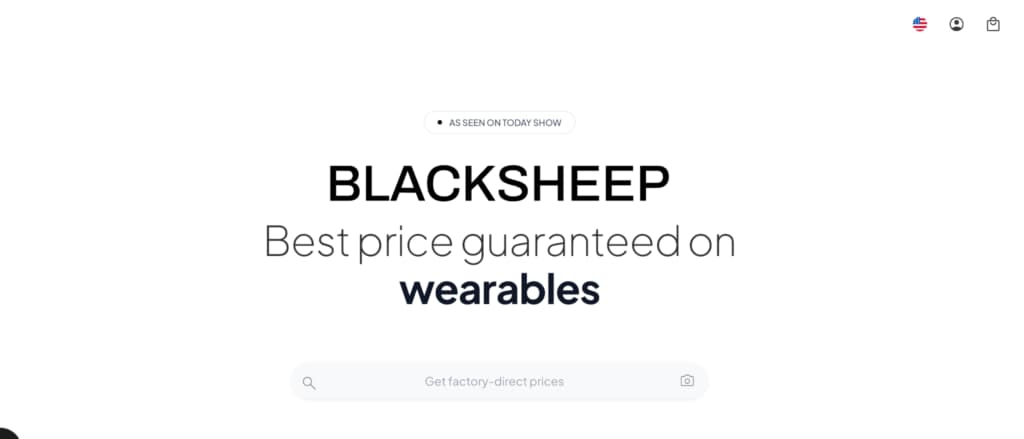
Blacksheep factory-direct eyewear is built on an idea that feels surprisingly obvious once someone says it out loud: prescription glasses don’t become better simply because more companies handle them before they reach the customer.
Rather than relying on the traditional retail chain, Blacksheep works directly with manufacturing partners. The result is pricing that starts at just $2.95 for selected frames — a number that would have seemed unrealistic in the online eyewear market only a few years ago.
Low pricing isn’t carrying the entire business, though.
The catalog includes more than 20,000 styles, giving customers access to classic everyday frames, lightweight options, fashion collections, and prescription sunglasses without limiting them to a small clearance section. The company has also begun expanding into hearing technology and wearable products, reflecting broader ambitions than eyewear alone.
Highlights include:
- Frames starting at $2.95
- More than 20,000 eyewear styles
- Direct-to-consumer pricing
- Prescription and non-prescription options
- Expansion into smart technology and hearing products
There’s an important distinction between buying something that’s inexpensive and buying something that delivers real value. Blacksheep has focused on narrowing that gap by reducing the costs surrounding the product rather than reducing customer choice.
2. Zenni Optical
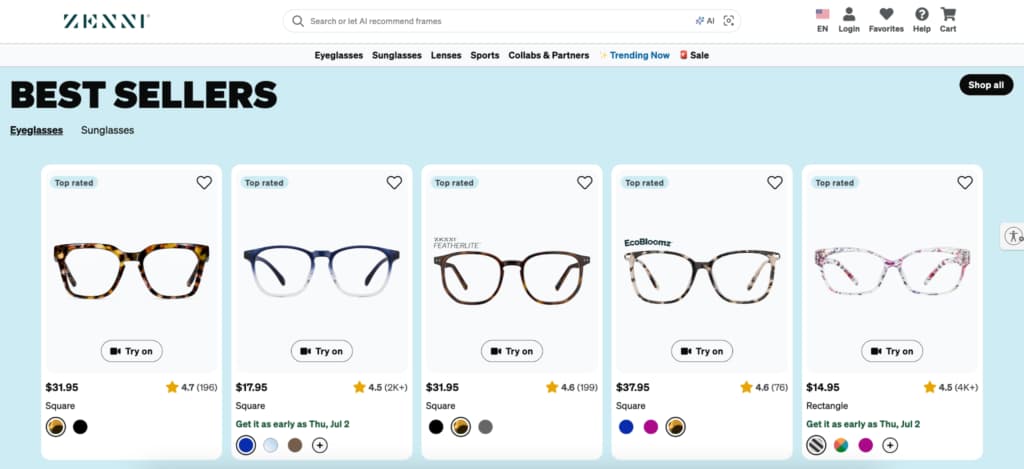
Zenni rarely tries to convince customers that buying glasses should feel luxurious. Its message has always been simpler.
Give people enough styles, enough lens options, and enough flexibility to build the pair they actually want instead of settling for whatever happens to be hanging on a display wall.
That philosophy has helped Zenni become one of the largest names in online prescription eyewear. The company offers everything from minimalist everyday frames to sports glasses and progressive lenses, all within a pricing structure that remains accessible for a wide range of budgets.
Highlights include:
- Extensive frame selection
- Progressive lens options
- Prescription sunglasses
- Children’s eyewear
- Virtual try-on
For shoppers who like comparing dozens of possibilities before making a decision, Zenni’s enormous catalog remains one of its biggest advantages.
3. EyeBuyDirect
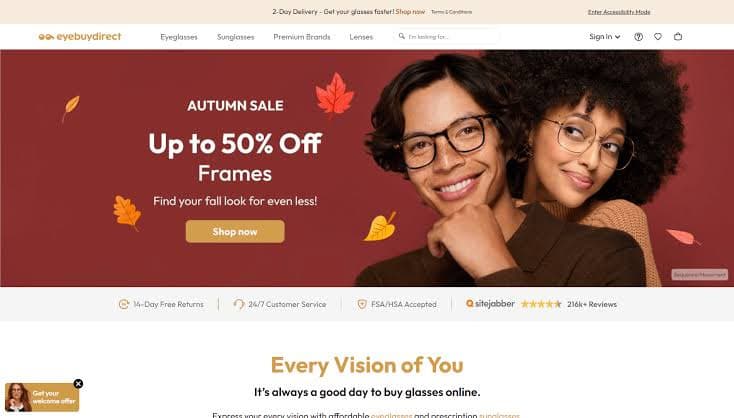
It’s easy to assume value is all about paying less. Sometimes it’s about buying something you’ll actually want to wear.
EyeBuyDirect has spent years moving away from the “budget glasses” image by investing in collections that feel current rather than purely practical. New styles appear regularly, collaborations keep the catalog fresh, and prescription lenses remain available across most of the lineup.
Highlights include:
- Fashion-focused collections
- Prescription sunglasses
- Blue-light lenses
- Virtual try-on
- Frequent promotions
For shoppers who replace their glasses because they want something different—not because the old pair broke—EyeBuyDirect offers noticeably more variety than many retail chains.
4. Warby Parker
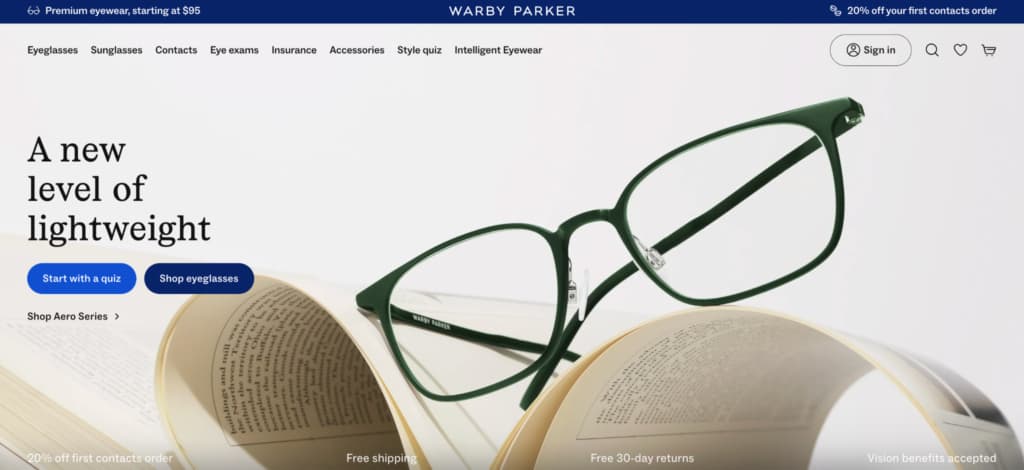
Walk into a traditional optical store, and someone usually guides the experience from beginning to end. Warby Parker kept that feeling, just in a different format.
Its Home Try-On program gives customers time to live with several frames before deciding, something that’s difficult to recreate during a quick visit to a shopping mall. Physical stores remain part of the business, making the transition between online and offline surprisingly seamless.
Highlights include:
- Home Try-On
- Prescription sunglasses
- Eye exams
- Curated collections
- Retail locations
Warby Parker isn’t competing to be the lowest-priced option. It competes by making the buying experience feel comfortable from start to finish.
Value Isn’t Measured On The Receipt
A $300 pair of glasses can be poor value. A $40 pair can be excellent value. Those two statements aren’t contradictory.
Value comes from the relationship between what you pay and what you receive in return. Comfortable frames you’ll wear every day often deliver more value than expensive ones that spend most of their life inside a drawer. That’s why comparing brands purely by price usually misses the point.
Four Questions Worth Asking Before You Buy
Before clicking “Order,” it’s worth stopping for a minute.
Ask yourself:
- How many frame styles can I actually choose from?
- Are the lens options right for my prescription?
- If something doesn’t fit, how easy is the return process?
- Am I paying for the product — or for the way it’s being sold?
Those answers tend to reveal much more than a promotional discount.
Retail Chains Aren’t The Only Standard Anymore
For years, traditional optical stores defined what buying glasses was supposed to look like. Today they represent one option among many.
Direct-to-consumer companies have changed expectations by giving shoppers broader catalogs, clearer pricing, and more flexibility than was common a decade ago. Interest in prescription glasses under $10 has grown for the same reason: people have become more aware that retail pricing isn’t the only pricing model available.
The brands above illustrate that shift from different angles. Some focus on affordability. Others on design or customer experience. What they have in common is a willingness to challenge assumptions that shaped the eyewear industry for decades, and that has given consumers far more choice than they’ve ever had before.