Speaking is the hardest part. You can know hundreds of words, but when someone asks you a simple question, your brain goes blank. AI apps help with this because there is no real person watching you fail. You just talk, mess up, repeat, and slowly get better. That is the whole point.
This list looks at four apps that actually try to get you speaking. Promova is first because it mixes lessons, AI conversation, and extra tools for people who need a different learning setup. None of these apps are perfect. Here is how they compare.
What Makes an AI Speaking App Worth Using
A lot of language apps do not help you speak at all. They just test your vocabulary or grammar. The good ones let you practise through prompts, corrections, and repetition. A decent app should make you more confident over time. Feedback, lesson flow, voice interaction, and topic variety all matter. Here is what to actually look for:
- Feedback quality: whether the app tells you useful things about your pronunciation or word choice;
- Learning structure: whether the app gives you a clear path or just throws random exercises at you;
- Best-fit learner type: whether the app works for beginners, busy people, advanced speakers, or those who want a tutor-like feel.
What you need depends on your routine, your confidence level, and how much hand-holding you want. Let us get into the list.
1. Promova
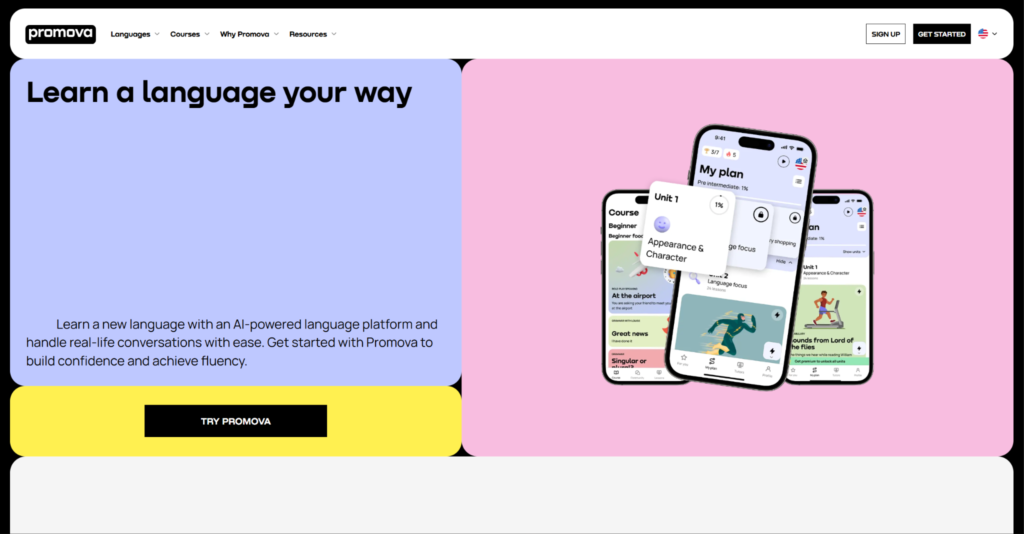
Promova is a language learning app for people who want to speak, not just tap flashcards. The app gives you lessons that actually follow a plan. It has an AI tutor, speaking practice, and AI chats. Real teachers make the content, so it is not just an algorithm guessing. No sales pitch here.
Promova tops the list because it mixes lessons, role-play, and features for different kinds of learners. Dyslexia Mode 2.0, White Noise Mode for ADHD, and ASL support show the platform actually thinks about real people. Speaking is harder when the learning setup stresses you out. Downside: not every language pair is available, free access is limited, and the AI tutor might not work everywhere.
What makes Promova work is not one fancy feature. It is how all the pieces fit together. Key stuff includes:
- AI role-play: Lets you practise realistic situations without pressure;
- AI tutor and chats: Gives you a way to train without live classes;
- Structured lessons: Keeps your practice organized, not random;
- Teacher-made content: Courses built by humans, not just code;
- Accessibility tools: Dyslexia Mode, White Noise Mode, and ASL help more people learn.
Promova works best for people who want a guided app that actually helps you speak and does not assume everyone learns the same way. It delivers without overpromising.
2. Speak
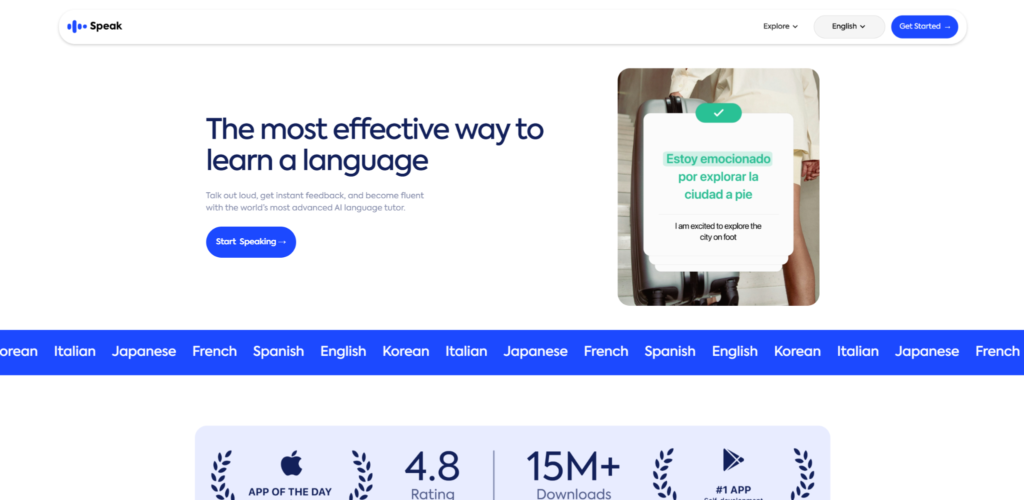
Speak is for people who just need to talk more. The app focuses on voice practice with AI feedback. It is not a big course library. It is a speaking-first tool. Speak works well if you already know some basics but need to get more fluent. It does one thing and does it fine.
Speak and Promova do different things. Speak focuses on repetition, voice interaction, and fast feedback. Promova is broader because it mixes speaking tools with lessons and accessibility stuff. Speak is a good choice if your main goal is just to speak more. The app is focused, not fancy.
Speak works best when you want active practice instead of tapping answers. Main features:
- Voice-first practice: Gets you speaking aloud, not just clicking;
- Instant feedback: Helps you catch mistakes fast;
- Fluency training: Repeats everyday situations and common answers;
- Focused approach: Works best if speaking is your only goal.
Speak is a solid pick if you want a narrow, focused speaking tool. Next up, Praktika.
3. Praktika
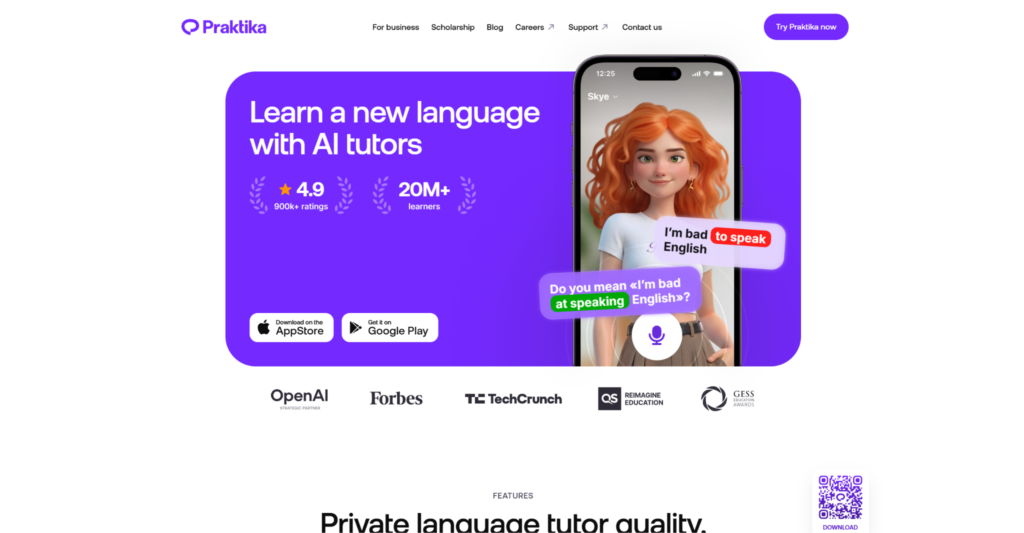
Praktika is an AI tutor app built around avatar-led practice. The main idea is training with a digital tutor instead of doing standard lessons. This works for people who want conversation simulation, corrections, and some personality in their practice. Praktika is good for users who like app-based interaction but still want a tutor-like setup. No buzzwords here.
How does Praktika compare? It feels like an AI tutor session. Speak focuses more on repetition and feedback. Promova is broader because it mixes AI speaking with teacher-made courses and accessibility tools. Praktika appeals to people preparing for travel, work, exams, or just daily chats. Straight to the point.
Praktika’s value comes from avatar-led practice and scenario-based learning. Main features:
AI avatar tutors: Create a tutor-like practice format inside the app;
- Scenario-based lessons: Help you train for travel, work, exams, or everyday chats;
- Correction and guidance: Give you feedback while you speak;
- Interactive style: Works well if you prefer character-led learning.
Praktika is best for learners who want an AI tutor experience with more personality and simulated dialogue. Next is Langua.
4. Langua
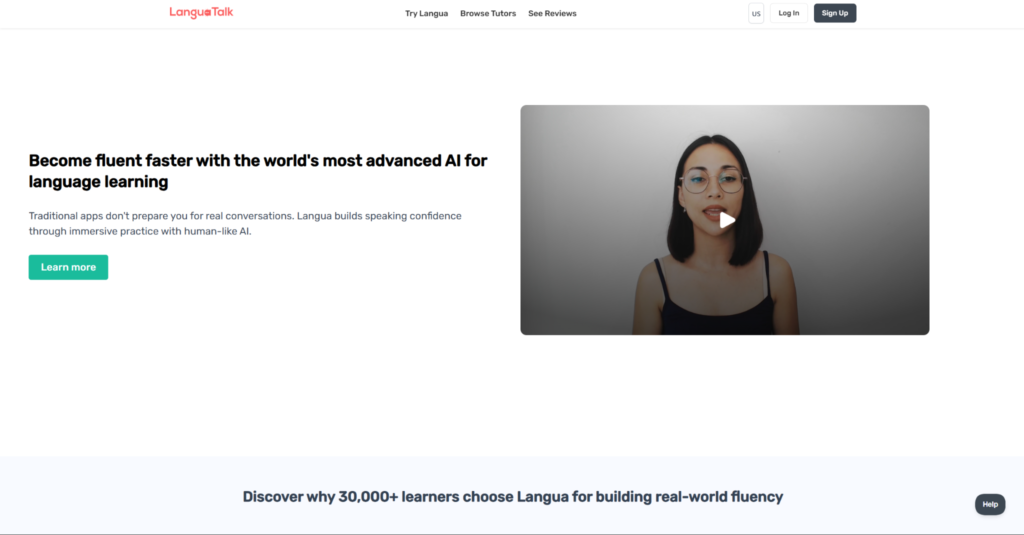
Langua focuses on realistic AI conversation practice. The app helps learners who feel that normal apps do not prepare them for real dialogue. Langua builds confidence, natural responses, and repeated conversation exposure. It is good for people who want to practise speaking without booking live tutors. The description stays simple.
Where does Langua fit? Compared to Promova, it is more conversation-centred and narrower. Compared to Speak, it focuses more on dialogue flow than drills. Compared to Praktika, it offers a human-like conversation option instead of an avatar-heavy format. Langua is good, but Promova stays the better all-around pick because it mixes conversations with structure, human-made content, and accessibility.
Langua works when you want to get closer to the real conversation rhythm. Main features:
- Human-like AI chats: Let you practise responses in a natural flow;
- Confidence building: Gives you space to mess up before talking to real people;
- Conversation-first design: Less passive lessons, more active dialogue;
- Flexible practice: Works for learners who want extra speaking time outside classes.
Langua is a good pick if you mainly want realistic AI conversation practice. Now, which app fits you?
Which AI Language Learning App Fits You Best
Your choice depends on how you learn and what you struggle with. Promova is the strongest overall pick for lessons, AI speaking practice, teacher-made content, and accessibility. Speak is better if you just want to repeat phrases and get fast feedback. Praktika fits learners who like avatar tutors and scenario-based lessons. Langua is best if you want a natural conversation flow. No app is perfect for everyone. Pick the one that matches your problem.
Choose Promova: If you want lessons, AI tutor support, speaking practice, and accessibility features;
- Pick Speak when your main goal is frequent voice practice and fast correction;
- Try Praktika if you prefer avatar-led tutor practice and scenario-based lessons;
- Consider Langua if you want a flexible AI conversation that feels more like real talking.
Match the tool to your problem.
Final Thoughts
AI language apps help when they make you speak more, not just learn more words. The good ones give you space to repeat, get corrected, and try realistic answers. Speaking practice needs some structure; otherwise, you just wander around randomly. Promova stands out because it connects AI speaking practice with structured lessons, human-made content, and accessibility tools. No hype here.
Speak is strong for direct speaking drills. Praktika works well for tutor-style practice. Langua excels at conversation flow. Promova is the best starting point for people who want an app that helps you speak without losing course structure. Check which languages are available, what the free plan offers, and whether the AI tutor works in your region. The best app is the one that makes you speak often, clearly, and repeatedly. That is how you actually get better.