Here is a scenario that plays out inside thousands of B2B tech companies every week. A new customer signs up. Your team asks for proof of income or source of funds. The customer emails scanned bank statements from three months ago. Your compliance team spends forty-five minutes matching transactions to claims. The deal sits in limbo for days.
Open banking verification workflows fix this. You request permission once. The customer authorizes access through their bank. Real data arrives within seconds. PDFs disappear from the process. Manual entry becomes unnecessary. Back-and-forth stops happening.
The three firms below built their platforms specifically for B2B tech companies that need verification at scale. Each takes a different approach. Here is how they compare.
1. Finexer
A Senior Claims Manager at Meridian Risk Management posted a review about Finexer, an open banking verification firm, on SaaSHub. “We introduced Finexer to help validate claimant income and assess spending behaviour using consented bank data. It’s made our claims process much faster, especially for complex or high-value cases.”
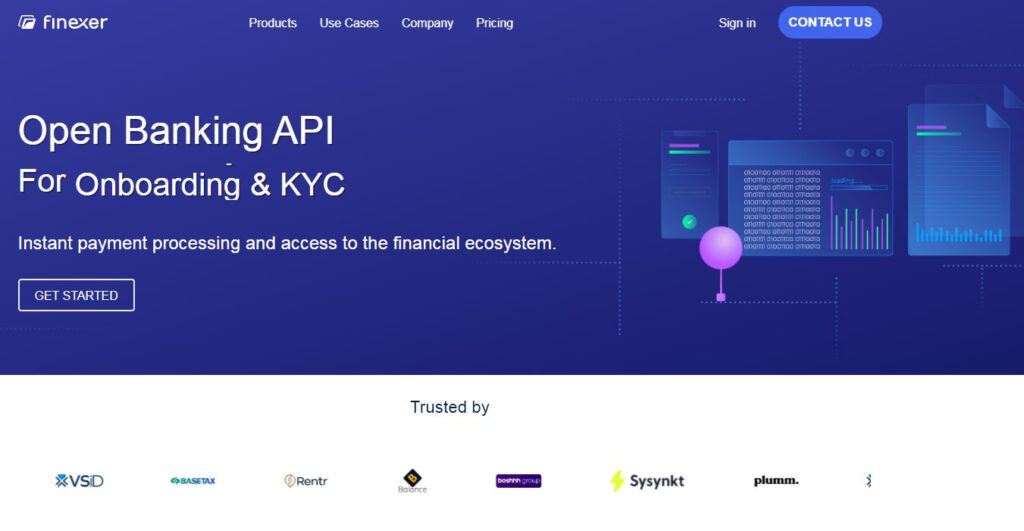
The same reviewer noted something unusual about the open banking verification company. “Deployment was quick, and the onboarding support from their team was genuinely hands-on…a rarity. The white-label setup also meant our clients saw a consistent, branded experience throughout.”
A Senior Partner at 360 Law Services wrote on OMR Reviews about Finexer’s source of funds checks. “It allows me to run source of funds checks in minutes, which keeps transactions moving without unnecessary delays. The platform provides secure, regulator-ready data, giving me confidence that compliance standards are met.”
What this open banking verification firm delivers:
- Single API covering income verification, affordability assessment, and transaction data enrichment
- White-label consent journeys with full HTML and CSS customization
- FCA-authorized with agent licensing capabilities
Here is what verified users reported:
- Senior Claims Manager: Faster decision-making, reduced admin time, lower fraudulent claim risk
- Law firm partner: Source of funds checks in minutes, regulator-ready data, reduced onboarding bottlenecks
- Risk analyst at Cartbridge Marketplace: “Clean, structured transaction data that’s easy to work with. Helps validate seller activity quickly and improves accuracy of risk scoring during onboarding and ongoing monitoring.”
Where this verification company operates: Finexer Ltd with firm reference number 925695. The company provides account information services and payment initiation services from its UK base at 124 City Road, London, EC1V 2NX.
The Finexer approach to verification: Combine transaction data, balance checks, and identity confirmation into a single consent flow. No separate verification endpoint to call. The data arrives already structured for compliance use cases.
2. Plaid
One Nevada Credit Union needed to cut fraud and speed up online account opening. They partnered with Glide and Plaid. The results were published in a Plaid customer story.
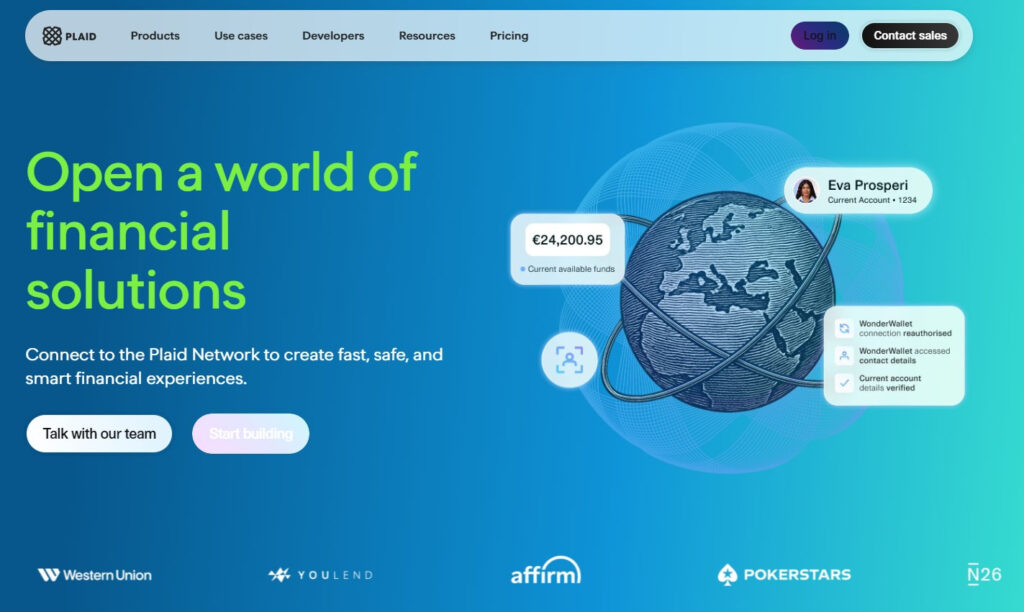
Account opening fraud dropped by fifty percent within six months. Ninety-five percent of new accounts get funded online and enrolled in digital banking on day one. Applicants complete the entire process, from selecting products to funding their account to logging in, in under two minutes.
Before this integration, nearly twenty percent of new accounts closed within thirty days due to fraud or lack of funding. Today, eighty percent of accounts get auto-approved.
What this identity verification company offers:
- Identity Verification with phone number, device, and email fraud signal evaluation
- Balance checks to confirm account funding before closing applications
- External account linking for ongoing verification
What a Capterra reviewer wrote about Plaid: “They provide a wide range of APIs to fulfill all of your requirements, like Bank verification facility for ACH payments, they help you see bank account transactions, balances, identities and many more. They are beginners of inventing this facility, and they are leading in the provision of electronic financial services. I have done 20+ integrations for my clients, and they are all happy.”
The Plaid verification edge: Fraud signals across multiple data points. Not just name matching. Device intelligence, email reputation, and phone number validation stacked on top of bank authentication.
The catch for B2B tech: Plaid built their verification products primarily for B2C onboarding. Loan applications. Account openings. Digital wallets. B2B workflows like supplier verification or corporate KYB require more customization.
3. TrueLayer
Nutmeg, the UK’s largest digital wealth manager with over one hundred thousand customers, needed to improve investor onboarding. Before TrueLayer, most payments came via debit cards. Those took several days to arrive, delaying funds reaching the market. Some payments came via manual bank transfer. Those were cost-effective but created reconciliation headaches.
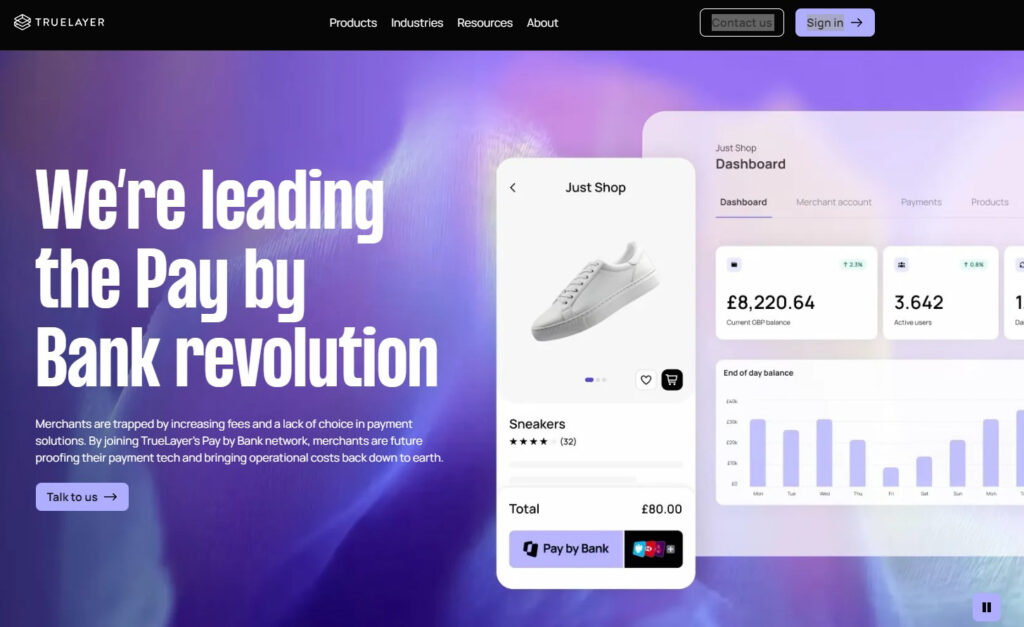
Charlie Masters, Product Manager at Nutmeg, explained the change. “Open banking with TrueLayer allows us to pass payment details to the user’s bank via a third-party payment initiator. This only requires the user to log in to their bank and confirm the payment to their Nutmeg account.”
The result. Payments via open banking now account for around a quarter of all Nutmeg payments, and the share keeps growing. Customers chose the option themselves without any push from the platform.
What this verification API provider built:
- Verification API with a name-matching engine that cross-checks user names against bank records
- Real-time match, no match, or no account holder name found responses
- Face ID and fingerprint authentication through the user’s banking app
How TrueLayer verification works: Redirect users to their banking app. They confirm account ownership using biometrics. TrueLayer crosschecks the user’s name with bank records behind the scenes. The merchant receives a verified true or false result in real time.
The TrueLayer verification differentiator: Purpose-built verification API rather than repurposed AIS endpoints. The name matching engine handles variations. William versus Will versus Bill. The system returns a match score and the bank’s recorded name for comparison.
The catch for B2B tech: Verification is a separate product from their core PIS. You need both for a complete workflow. That means two integrations or one unified provider that bundles both.
Three Types of Verification Workflows
B2B tech platforms need verification for different reasons. Platforms may need to verify bank data for onboarding, compliance review, seller checks, claims validation, or source of funds workflows.Law firms verify the source of funds before accepting client money. Marketplaces screen sellers before allowing transactions. Insurance companies validate claims before paying out.
Each verification workflow follows one of three patterns.
- Document replacement. The platform asks for bank data instead of PDF statements. A customer service representative reviews the data. This works for low volume but does not scale.
- Rules-based verification. The platform sets thresholds. Income above X amount. Account age above Y days. No overdrafts in Z months. The system approves or flags automatically. This scales well but misses nuance.
- Hybrid verification. Automated rules handle clear approvals. Edge cases go to human review with structured data. This combines speed with accuracy. Most B2B platforms end up here after trying the other two.
Finexer supports all three. Their data comes pre-structured for rules engines. White-label consent keeps your brand visible. The same API serves both automated decisions and human review workflows.
Plaid built their verification for the document replacement model first. Strong identity checks. Reliable account funding. The rules-based automation layer requires additional integration work.
TrueLayer verification works best as a standalone check. Name matching. Account confirmation. The surrounding workflow needs your team to build the decision engine.
Frequently Asked Questions
These eight questions come up in every B2B tech procurement conversation we have heard. Here are the straight answers from our research.
Which firm offers the fastest verification turnaround?
All three return results in seconds. The difference is what happens before verification. Finexer bundles consent, data access, and verification into one flow. Plaid separates identity verification from account linking. TrueLayer requires the user to authenticate separately for verification and payment initiation.
Do any of these firms handle source of funds verification for legal and compliance use cases?
Yes. A law firm partner reviewed Finexer specifically for this use case on OMR Reviews. “It allows me to run source of funds checks in minutes, which keeps transactions moving without unnecessary delays. The platform provides secure, regulator-ready data, giving me confidence that compliance standards are met.”
What about white-label branding on verification screens?
Finexer provides full HTML and CSS customization. The Meridian Risk Management review mentioned this directly. “Finexer gave us the ability to fully tailor the verification journey with our branding, which helped streamline claimant trust.” Plaid and TrueLayer offer customization options at enterprise tiers.
Which firm requires the least engineering work to implement verification?
Finexer bundles verification with their unified API. One integration covers data, payments, and verification. Plaid requires separate integrations for Identity Verification and for AIS. TrueLayer verification is a separate API from their core payment products.
Can these firms verify business bank accounts or just personal accounts?
Finexer supports business bank accounts as part of their UK coverage. Plaid supports business accounts through their core linking product. TrueLayer verification focuses on personal account name matching.
Wrapping Up
Verification workflows separate B2B tech platforms that scale from those that drown in manual reviews.
Finexer built their verification capabilities for UK B2B platforms that cannot afford to slow down onboarding. White label consent keeps your brand front and centre. Structured data feeds directly into compliance workflows. Verified reviews from law firms, insurance companies, and marketplaces confirm the approach works.
Plaid brings fraud detection and identity verification at scale. The One Nevada case study proved a fifty percent fraud reduction. For platforms needing heavy fraud protection at onboarding, Plaid delivers.
TrueLayer verification solves a specific problem. Name matching. Account confirmation. Fast and reliable. For wealth managers and platforms that just need to know the person matches the account, TrueLayer fits.
Pick the verification workflow firm based on your use case. Lending and fraud prevention point toward Plaid. Simple name matching points toward TrueLayer. End-to-end verification, plus payments, plus data for UK B2B platforms points toward Finexer.